


























Charity Texts and Fake Fundraisers: Payment Red Flags Before You Give
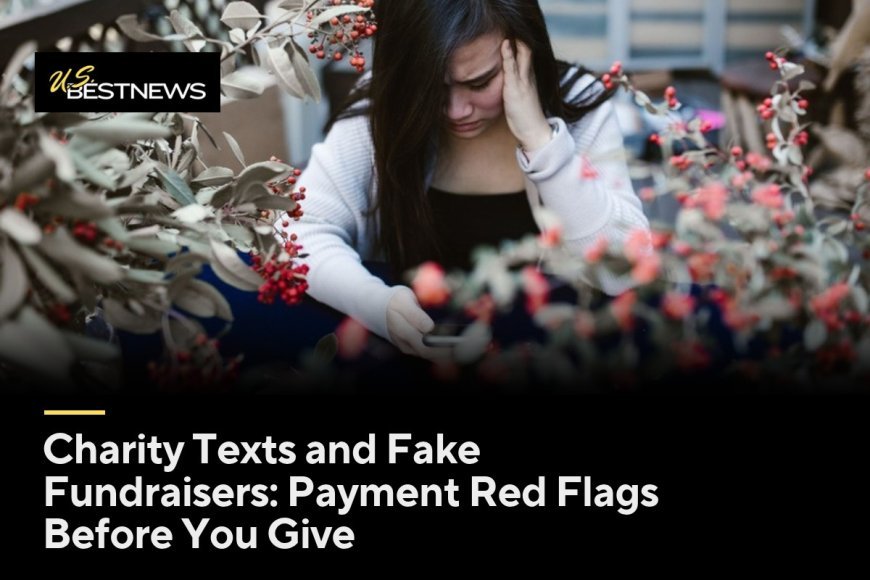
A text arrives: a local family lost everything in a fire, and you can help by tapping a link and sending $25. It feels urgent and personal, and that is exactly why it works. Charity scams spike during the holidays, when people are in a giving mood and busy enough to skip a few checks.
The good news is that most fake fundraisers share the same warning signs, and many of them show up in how the scammer asks you to pay. Here is what the Federal Trade Commission and other agencies advise, and how to give safely this season.
How charity text scams work
Scammers send texts that look like they come from a charity, a disaster relief effort or a local cause. Some use the names of real organizations. Others invent names that sound similar to well-known charities.
The message usually includes a link to a donation page or asks you to reply with a payment. Some say you pledged a donation earlier and now need to pay it. Others thank you for a donation you never made, hoping you will click to dispute it.
The FTC warns that scammers often try to rush you. They may say the need is urgent or that a matching gift expires soon. Pressure to act quickly is one of the clearest red flags.
Payment red flags
How a fundraiser asks you to pay can tell you a lot. The FTC advises never donating by cash, gift card, cryptocurrency or wire transfer. Legitimate charities rarely ask for these, and scammers prefer them because the money is hard to trace or recover.
Be wary of requests to send money through a payment app to an individual's account, especially if you do not know the person. Payment apps are designed for paying people you know, and money sent to a scammer may be difficult to get back.
The FTC recommends paying by credit card or check, which leave a record and may offer more protection if something goes wrong. If you donate online, make sure you are on the charity's real website, not a link from a text.
Verify before you give
The FTC suggests searching the charity's name online along with words such as scam, review or complaint. If others have reported problems, you will often find them quickly.
Look up the organization on charity watchdog sites, such as BBB Wise Giving Alliance, Charity Navigator, CharityWatch or Candid. These groups evaluate charities and report on how they use donations.
You can also check whether an organization is registered as a tax-exempt charity with the IRS using its Tax Exempt Organization Search tool. If you want a tax deduction, this matters. Donations to individuals or crowdfunding campaigns for individuals are generally not tax-deductible.
Text-to-donate: how to do it safely
Real text-to-donate campaigns exist, and many charities use short codes to collect small donations that appear on your phone bill. But the FTC advises confirming the number on the charity's official website before you text.
If a text asks you to click a link to donate, do not use it. Instead, go to the charity's website directly by typing the address into your browser or using a search engine.
Do not reply to unexpected texts asking for donations, even to say stop, unless you know the sender. Replying can confirm that your number is active.
Crowdfunding campaigns
Crowdfunding sites host many genuine fundraisers for individuals and families in need. But anyone can create a campaign, and some are fake.
The FTC advises donating to people you know personally when using crowdfunding, or verifying the organizer and the cause. Check whether the organizer is clearly connected to the person or family being helped and whether the campaign is shared by people you trust.
Read the platform's policies on fraud and refunds. Some platforms offer guarantees in certain cases, but rules vary.
Phone and social media requests
Charity scams do not only come by text. Phone calls, social media posts and direct messages are also common. Some scammers use fake social media accounts or hack real ones to ask friends for money.
If a friend messages you asking you to donate to a cause, check with them through another channel, such as a phone call, before giving. Their account may have been compromised.
For phone requests, ask for the caller's name, the charity's full name and address, and how much of your donation goes to the cause. Legitimate fundraisers should answer without pressure. You can always hang up and donate directly through the charity's website.
Giving Tuesday and holiday appeals
Giving Tuesday, which falls on the Tuesday after Thanksgiving, brings a wave of legitimate appeals, and scammers take advantage of the noise. Plan your giving ahead of time so you are not making decisions under pressure.
Make a short list of charities you want to support this year. Look them up in advance and donate through their official websites. That way, you can ignore unexpected requests without feeling guilty.
If you receive many appeals, it is fine to say no. A thoughtful gift to an organization you trust often does more good than many small donations to causes you cannot verify.
If you think you were scammed
If you paid with a credit or debit card, contact your card issuer right away and ask about disputing the charge. If you used a payment app, report the transaction to the app and your bank.
If you sent a gift card, contact the company that issued it and tell them it was used in a scam. Keep the card and receipt. Acting quickly gives you the best chance of recovering money.
Report the scam to the FTC at ReportFraud.ftc.gov. You can also report scam texts by forwarding them to 7726, which spells SPAM, so your carrier can block similar messages.
Protect older relatives
Older adults are frequent targets of charity scams, especially by phone and mail. Talk with older relatives about the red flags, including requests for gift cards, wire transfers or cash, and pressure to give right away.
Suggest a simple plan: make a list of trusted charities each year, give only to those and say no politely to everyone else. Offer to help check any new request before they give. A short conversation can save a lot of money and stress.
Common mistakes even careful donors make
One common mistake is trusting a familiar name. Scammers copy the names and logos of well-known charities or use names that differ by one word. Always check the exact name and go to the charity's site yourself.
Another is giving on the spot because a caller or texter says a matching gift ends tonight. Real matching campaigns do exist, but a legitimate charity will still accept your gift tomorrow, after you check.
A third is assuming that a text from a local number is local. Numbers can be spoofed, and a local area code proves nothing about who sent the message.
What to do this week
Pick the two or three causes you most want to support this season. Look each one up with the FTC's suggested search for its name plus scam or complaint, and save the official donation page in your browser. When unexpected appeals arrive, you can point yourself to that list and ignore the rest.
A simple rule for the season
Give on your terms, not the caller's or texter's. If you start the donation yourself, by going to a charity's website or mailing a check, you avoid most scams.
Remember the payment red flags: gift cards, wire transfers, cryptocurrency, cash and payments to individuals you do not know. When you see one, stop and check.
Generosity is one of the best parts of the holiday season. A few minutes of checking makes sure your money reaches people who need it.
What's Your Reaction?
 Like
0
 Dislike
0
 Love
0
 Funny
0
 Angry
0
 Sad
0
 Wow
0