

























Your Bank Branch Is Closing: How to Handle Cash Deposits and Safe-Deposit Boxes
The letter is easy to miss among statements and card offers. Your branch will close on a date a few months away, your accounts will move or remain accessible elsewhere, and a safe-deposit box, if you have one, must be emptied by a deadline. It reads like administration. For anyone who deposits cash, relies on a teller, or keeps papers in that vault, it is a project.
Banks close and consolidate branches as more customers bank by phone and computer. Your money does not vanish, and insured deposits remain insured at the bank. What changes is access: where you can deposit cash safely, who knows you, and how long you have to make decisions about a box whose contents may matter greatly.
Read the notice for the four dates that matter
Find the last business day of the branch, the date accounts transfer if they move to another branch or bank, any deadline for emptying a safe-deposit box, and the date fees or access terms change if they do. Put those dates on a calendar with reminders two weeks earlier. A notice filed in a drawer until the final week turns simple choices into urgent ones.
Confirm whether your account numbers, debit cards, and online access stay the same. In many consolidations they do, but a merger or sale of branches can bring new routing numbers, cards, or bill-pay instructions. Do not rely on a neighbor's notice if your letter says something different. Accounts at the same closing branch can occasionally be treated differently.
Ask the bank where your new home branch is, what its hours are, and whether the same safe-deposit box size is available there or nearby. If you chose the branch because you can walk to it, the assigned replacement may not serve you. Knowing that now gives you time to choose a bank or credit union that fits your actual life rather than accepting the default.
Cash deposits after the counter goes
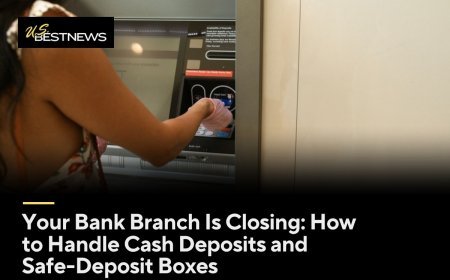
If you deposit cash from a business, a market stall, tips, or household budgeting, ask exactly how cash will work after closure. An ATM may accept cash deposits, but ask about deposit limits, when funds become available, whether the machine gives an image receipt, and what to do if it takes cash without crediting it correctly. Keep the receipt until the deposit shows correctly in the account.
Night deposit, mobile deposit of a money order, or depositing at another branch may be alternatives, each with fees and record issues. Do not mail cash. If you convert cash to a money order or cashier's check, price the fee and keep the stub. For a small business, ask whether the bank offers a smart safe, remote cash service, or partner locations, and what those cost per month.
Test the replacement before the branch closes. Make one ordinary cash deposit through the ATM or new branch and watch how it posts. A test on a calm Tuesday teaches you the machine, the receipt, and the support number. Learning the process with a week's takings on the last Friday before closure is a stress nobody needs to schedule.
Safe-deposit boxes: do not miss the vault deadline
A safe-deposit box is a rental, not an insured account, and its contents are not covered by FDIC insurance merely because the box sits in a bank. If the branch closes, the bank will tell you to remove the contents, transfer the box, or respond by a date. Ask whether you must appear in person, who else is authorized on the box, what identification is required, and how an estate or power-of-attorney situation is handled.
Inventory the box when you open it. Photograph or list the contents as you remove them, especially wills, deeds, titles, jewelry, collectibles, and documents whose loss would be hard to replace. Original wills and documents a family may need immediately after a death deserve special thought, because access to a box can be delayed by paperwork at the worst moment. Ask an attorney where originals should be kept in your state.
If you rent a box at the new location, compare size, annual rent, drilling or key fees, and access hours. If no authorized person responds for a long period, unclaimed property rules can eventually send contents through the bank's abandoned-property process under state law. Do not test that system. A missed box deadline creates delay and paperwork out of proportion to the ten-minute visit it takes to empty it.
Payments, people, and records to move
List what touches the account rather than assuming a transfer carries everything. Direct deposits, loan payments, bill pay, linked savings, overdraft protection, safe-deposit billing, and external transfers should each be confirmed. If routing or account numbers change, notify employers and benefit payers early and keep the old account open through one cycle if the bank advises it and fees allow.
People matter too. If a teller knows your business deposits, an older parent's habits, or a fraud concern on the account, ask whether a note can follow the account or whom to meet at the new branch. Bring identification and introduce yourself before there is a problem. A familiar face is not a banking product, but it can shorten the first difficult conversation after a move.
Download statements and tax documents you may need before online access changes. Account histories usually survive a consolidation, but mergers and platform changes can make old records slower to retrieve. Keep the closure letter, final branch information, and proof of any box surrender. If the bank returns a box deposit or refunds rent, note when it should arrive and check that it does.
Protect older relatives during a branch change
If you help a parent or relative who banks at the closing branch, start earlier than you would for yourself. New routes, unfamiliar ATMs, and changed tellers can be genuinely distressing, and a safe-deposit box may hold documents you need to locate together. Ask the bank what identification and authorization are required before you travel, especially if you act under a power of attorney or as an executor.
Practice the replacement together. Walk or drive the new route, make a small deposit, find where receipts come from, and write the branch and support numbers in large, clear form if that helps. Meet the staff if you can. Confidence grows from one successful ordinary transaction, not from being told that online banking is easy by someone who has never watched your parent use it.
Watch for scams during the transition. Criminals exploit bank-change letters by calling with offers to move money safely or verify new account details. The bank should not ask you to hand cards or cash to a caller or courier. Verify any surprising instruction through the number on the closure letter or your card, and tell relatives that a branch move is exactly when to slow down.
Decide whether to follow the bank or choose again
A closure is a natural moment to compare. Look at monthly fees, ATM access, cash-deposit options, branch distance, customer service hours, and whether accounts for people who prefer in-person banking remain welcome. Credit unions and community banks may suit a cash-heavy household better; a larger bank may suit someone who travels. There is no loyalty prize for accepting a replacement that makes weekly banking harder.
If you switch, open the new account before closing the old one, move a test deposit, reroute income, and let outstanding items clear. Keep enough in the old account for late automatic payments while you change them, and get written confirmation when it finally closes with a zero balance. Switching in a rush because a branch door locked is how a payment gets lost between banks.
Your branch closing is an inconvenience the bank has scheduled. Put it on your schedule too. Protect cash access first, empty or transfer the box well before the vault deadline, confirm every automatic payment, and use the change to choose banking that fits how you actually handle money. The letter gave you notice. Use all of it.
What's Your Reaction?
 Like
0
 Dislike
0
 Love
0
 Funny
0
 Angry
0
 Sad
0
 Wow
0