




























Kids' Winter Coats and Boots: How to Buy Gear That Lasts More Than One Season
The common mistake is buying a coat that fits perfectly in October. It looks neat in the store, the sleeves end exactly at the wrist, and by February the cuffs are halfway up the forearm while the zipper has survived three playground wars and lost. Children's winter gear needs room for growth, layers, and abuse.
Lasting more than one season does not mean buying the most expensive label. It means choosing the features that usually fail first, leaving growth room without making the coat unsafe or miserable, and knowing which secondhand bargains are still warm. A coat worn by two children is cheaper than a bargain replaced in January.
Fit for growth without buying a tent
Have the child wear a normal sweater or fleece while trying the coat. The coat should close without pulling, let the child lift both arms, sit, and bend as if picking up a backpack. Sleeves should cover the wrist when arms reach forward. A little extra length is useful; sleeves that swallow the hands make zippers, gloves, and school routines frustrating.
Adjustable cuffs, a drawcord or elastic at the hem, and a hood that can tighten gently help a slightly roomy coat work now and later. Check that the hood does not block side vision when it is up and that cords and toggles are appropriate for the child's age and school rules. For young children, avoid loose drawstrings that can catch on playground equipment or bus doors.
For boots, try them late in the day with the socks the child will actually wear. Toes need wiggle room, but a boot so large that the heel lifts with every step invites blisters and falls. Ask the child to walk, climb a step if the store allows it, and squat. Many fit guides suggest roughly a thumb's width of growing room, but the child's walk matters more than a slogan.
The parts that fail first
Zippers decide whether a coat lives or dies. Look for a zipper that moves smoothly, is easy for the child's own fingers in gloves, and has a storm flap or chin guard where it helps. A two-way zipper can make sitting in a car seat or on a bus easier for older children. If the zipper catches in the store, it will not improve in a snowy parking lot.
Next check cuffs, knees of matching snow pants if you buy them, boot toes, and seams. Reinforced fabric in high-rub areas helps children who kneel, crawl, and fall as a hobby. Closures should still work when damp. Hook-and-loop that is already weak, thin boot liners that collapse, or a sole with little tread may be cheap now and costly later.
Warmth labels need a practical read. Brands use their own temperature claims, and children differ in activity and layering. A child waiting for a bus needs more insulation than one running at recess. Removable liners, in coats or boots, make drying easier and can stretch use across fall and spring. Wet insulation is cold insulation, whatever the tag promised.
Boots: dry feet beat fashionable feet
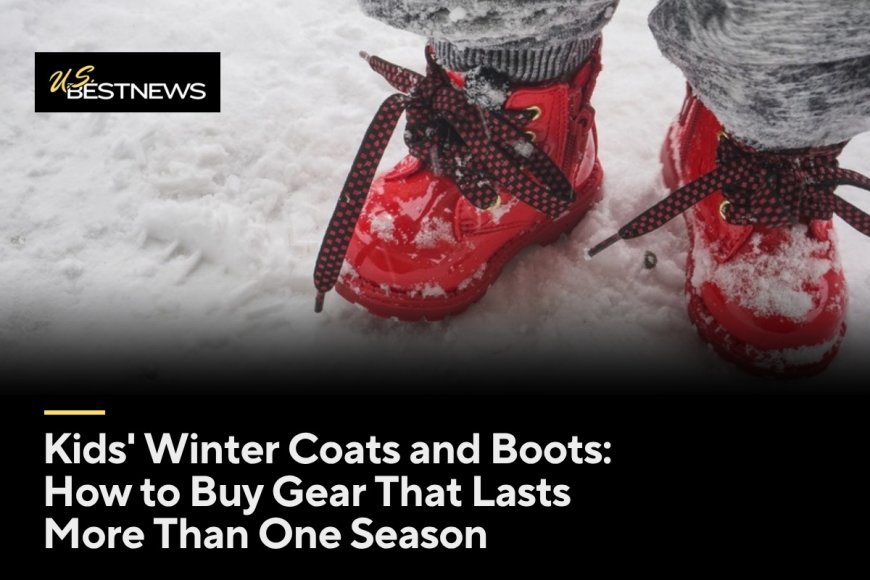
A winter boot should keep snow out before it worries about keeping style in. Look at the height, the closure at the top, and whether snow pants can go over the boot rather than funnel snow inside. Laces give an adjustable fit but can be hard for younger children; straps and bungee closures are faster but should hold the heel. Choose the system your child can manage at school.
Removable felt or insulated liners are worth attention because they can be pulled out to dry and sometimes replaced when the outer boot still has life. Check whether the sole is stitched, glued, or molded and whether the tread has real lugs for packed snow. A smooth fashion sole may be fine for a car-to-door winter and miserable at a sled hill.
Buy for the wettest day, not the prettiest one. If your child walks to school, waterproof construction matters more than a slightly higher warmth rating. If boots get soaked, stuff them loosely with newspaper or use a low-heat boot dryer if you have one, and keep them away from direct high heat that can damage materials. Two pairs in rotation help, but one well-chosen pair dried properly beats two poor pairs.
Secondhand, siblings, and the hand-me-down test
Used coats are often excellent value because children outgrow before they wear out, but inspect the same failure points. Run the zipper, look for compressed insulation, check cuffs and elbows, smell for mildew, and ask whether the coat has been washed in a way that harmed water resistance. For boots, check liner thickness, cracked rubber, worn tread, and whether the inside has molded to a shape that will rub a different foot.
Keep a simple size box or list. Note the brand, marked size, and the month it stopped fitting, because children's sizes vary wildly between labels. A coat that fit one seven-year-old may swamp another. Storing gear clean and fully dry, with zippers closed and boots unbuckled loosely, makes the next season's hand-me-down hunt much faster.
Know your child's school lost-and-found reality before sending the best gear. Put names inside coats, boots, gloves, and hats. A durable coat that disappears in November does not last more than one season. Some families keep the best set for weekends and send a decent backup coat for school if losses are frequent. That is not wasteful. It is risk management.
Make last year's gear tell you the truth
Before buying, lay out what still fits and try boots and coats on together, with snow pants if your child uses them. A coat may fit while the boots from the same season do not, because feet and torsos grow on different schedules. Mark what can be handed down, what needs repair, and what is missing. That ten-minute fitting prevents buying a second warm coat while the real gap is waterproof boots.
Small repairs can return gear to service. A zipper pull, seam repair, replacement boot liner, or new lace may cost far less than a replacement garment. Ask a shoe repair or outdoor shop what can be fixed before the cold arrives. In September a repair is a choice. In the first snow week it joins a queue of everyone else's emergencies.
After purchase, hang or store the outgoing size clean rather than tossing it into a damp bag. Note the brand and size on a card in the pocket. Future you, a sibling, or another family will thank present you for treating outgrown gear as next year's stock. Children's winter clothing is one household system where a little inventory discipline pays every single year.
When to buy, and when to walk away
End-of-season sales are the classic way to buy next year's coat, but only if you can judge size with growing room and keep the receipt where store policy allows exchanges. Buying ahead is less risky for a child growing steadily than for one in the middle of a spurt. Coats and boots bought in the current season should be judged on cost per wear across siblings and seasons, not only the sale percentage.
Walk away when the zipper sticks, the boot heel slips badly, the hood blocks vision, or the child hates wearing it. An unworn coat is the most expensive coat in the house. Also walk away from gear so bulky that a young child cannot move safely or use the bathroom at school without a full expedition. Warmth that teachers dread will not be worn properly.
Buy the coat and boots as a system. Coat length, snow pants, gloves that meet the cuffs, and boots that meet the pants decide whether snow stays outside. Spend first on fit, zippers, dry feet, and repairable liners. Names on the chest rarely keep a child warm. Good closures, honest room to grow, and a child willing to put the gear on do.
What's Your Reaction?
 Like
0
 Dislike
0
 Love
0
 Funny
0
 Angry
0
 Sad
0
 Wow
0