






















Denied a Bank Account? ChexSystems, Second-Chance Checking, and How to Fix It
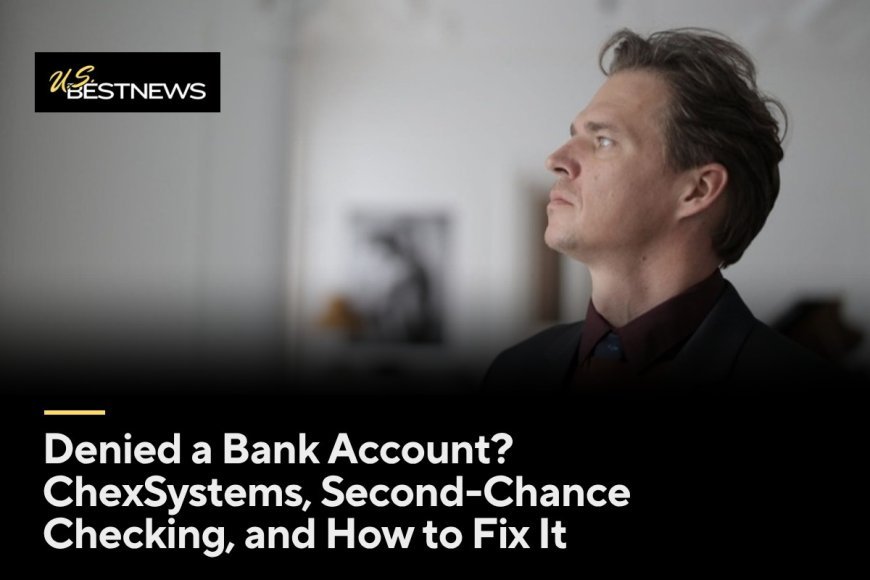
A man in his late twenties walks into a bank branch with his driver's license, a pay stub and $100 to open a checking account. The banker types, pauses and then says the application did not go through. It is not his credit score, she explains. It is something in a banking report, tied to an account that was closed years ago after an overdraft he never paid. He has no idea what to do next.
This is a composite, but the situation is common. Being turned down for a checking account is frustrating, and it does not have to be permanent. Here is a five-stage path to find out what is going on, fix what can be fixed and get an account open while you rebuild.
Stage 1: Find out who said no, and why
Start by understanding what happened. Banks often check a report from a company such as ChexSystems before opening an account. ChexSystems says it does not approve or decline anyone. It supplies information, and the bank's own policy makes the decision.
Ask the bank which company's report it used. The CFPB says that if a bank turns you down based on a checking account report, it must send an adverse action notice with the name and contact information of the reporting company, and you have the right to a free copy of that report. ChexSystems is one of the two largest companies. The other is Early Warning Services. A bank might have used either, so make sure you know which one.
Stage 2: Get your free report and read it closely
ChexSystems says you can get a free consumer disclosure report at least once every 12 months, and the CFPB notes you may also get one after an adverse action. You can request it through ChexSystems' website, by calling 800-428-9623 or by mail. Requesting your own report does not hurt your credit scores, the CFPB says.
Here is what to look for. According to ChexSystems, the file can include forcibly closed checking or savings accounts, returned checks reported to a check service, records of inquiries and check orders you have placed. What it does not include is your credit score, open accounts or voluntarily closed accounts with no history of mishandling.
Check every detail: your name and Social Security number, the bank's name, the dates and the amounts. Look for accounts you do not recognize, which can be a sign of identity theft.
Stage 3: Dispute anything that is wrong
You have the right to dispute inaccurate or incomplete information, and it costs nothing. The CFPB recommends filing a dispute with the reporting company and also with the bank or credit union that supplied the information.
ChexSystems accepts disputes through its consumer portal, by phone or by mail. You can dispute directly with the source, or ask ChexSystems to contact the source for you. Reinvestigations are usually completed within 30 days. Adding documents while the dispute is pending can extend that by up to 15 days. Helpful documents include account statements, a letter showing a balance was paid or settled and, in identity theft cases, a police report or identity theft affidavit.
If the investigation does not settle it, you can add a brief statement of up to 100 words to your file explaining your side. Anyone who receives your report will see it. Keep a copy of everything you send.
Stage 4: If the item is accurate, know what you can and cannot change
This is the hard part. Accurate negative information generally stays. ChexSystems says it keeps reported information for five years from the report date. Paying what you owe does not remove the entry. The bank that reported it is supposed to update the status to paid or settled, and ChexSystems says the entry stays on file with that updated status.
Even so, paying is often still worth it. It can end collection efforts, and some banks may view a paid balance more kindly. Policies vary by bank, so ask. Get any payoff in writing, and ask the bank to report the correct status.
Be careful with anyone who promises to "erase" accurate entries for a fee. You can dispute errors yourself for free, and you cannot buy your way past an accurate five-year record.
Stage 5: Open an account anyway, and rebuild
You still have options. The FDIC says some banks offer second-chance banking designed for people with past banking problems, and certified Bank On accounts are another route.
Know the costs. Second-chance accounts can come with higher fees than regular ones. As one example, a bank's published fee sheet, effective November 2025, lists a $9 setup fee, a monthly fee of $9.95 with direct deposit or $11.95 without, a $15 debit card setup fee, a $25 fee for closing the account within 180 days and a $32 overdraft fee. Other banks differ, and some accounts, such as Bank On certified ones, charge much less. The point is to read the fee sheet before you sign.
Bank On certified accounts follow national standards. The monthly fee must be $5 or less if it cannot be waived or $10 or less if it can be waived, there are no overdraft or non-sufficient-funds fees, and the account must be insured by the FDIC or the credit union equivalent. The FDIC says certified accounts have low and transparent costs. You can find them through the Bank On website. Not every bank that offers one will accept every applicant, so ask whether the bank screens with ChexSystems.
If you cannot open any account, the CFPB suggests a prepaid card as another option. Compare its fees carefully and ask whether your money is protected by deposit insurance.
Once you are in, use the account to rebuild. Set up direct deposit if you can, because it often lowers fees, and turn on low-balance alerts so you do not overdraw. Ask whether the bank lets you move to a regular account after a period of good use. Second-chance accounts are generally meant as a stepping stone while you rebuild your banking history.
Before you apply somewhere else
Resist the urge to apply at five banks in a week. ChexSystems says its files include records of inquiries, which means each bank that checks your report may leave a trace. Instead, call or check the website first and ask which reporting company the bank uses and whether it will open an account for someone with a closed-account record. Then apply where the answer is yes. Bring a government photo ID, your Social Security number or ITIN and a first deposit. The FDIC says you may be able to open an account with as little as $25.
In the meantime, be careful about check-cashing stores and money orders. The FDIC notes that having a bank account can save you check-cashing fees, and those costs add up quickly. If you must use a check casher for now, ask for the fee in advance and compare more than one.
One last thing
ChexSystems is not a credit bureau, and a fix there will not change your credit score. If you were also denied credit, check your credit reports separately. But for the checking account, the path above covers the main steps: find out who reported what, check it, dispute errors, handle what is accurate and open the right kind of account.
What's Your Reaction?
 Like
0
Like
0
 Dislike
0
Dislike
0
 Love
0
Love
0
 Funny
0
Funny
0
 Angry
0
Angry
0
 Sad
0
Sad
0
 Wow
0
Wow
0