



























Turning 65 but Still Working? How to Avoid Medicare Late-Enrollment Penalties
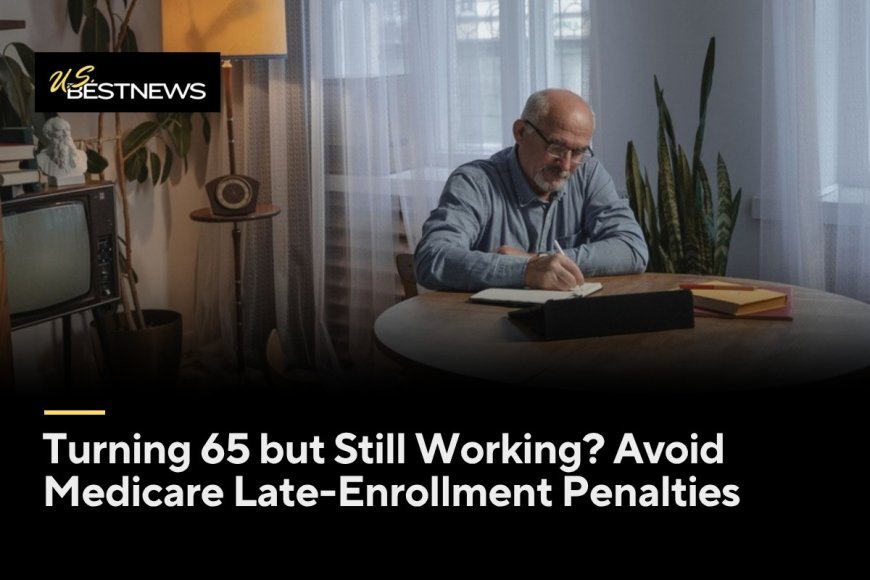
More Americans are working past 65, and many of them assume Medicare can wait until they retire. Sometimes that is true. Sometimes it is a costly mistake, because Medicare's late-enrollment penalties can last for the rest of your life. The rules depend on the kind of coverage you have, the size of your employer, and how you plan to use your health savings account.
Much of the confusion comes from half-true advice passed along by friends, coworkers, or even HR offices that rarely deal with Medicare questions. Here are the most common myths about turning 65 while still working, and what the rules actually say.
Myth: Everyone has to sign up for Medicare at 65
Fact: Not everyone does. If you or your spouse are still working and have health coverage through that current job, you may be able to delay Part B, and sometimes Part A, without a penalty. Your initial enrollment period runs for seven months around your 65th birthday, starting three months before your birthday month and ending three months after it. Whether you need to act during that window depends on the details below.
One exception: if you are already collecting Social Security benefits when you turn 65, you will generally be enrolled in Parts A and B automatically. Your Medicare card will arrive in the mail, and you will need to follow the instructions if you want to decline Part B because you have qualifying job coverage.
Myth: Any health insurance lets you delay Medicare
Fact: Only group health coverage based on current employment, either yours or your spouse's, lets you delay Part B and later use a special enrollment period. Several common types of coverage do not count. COBRA does not count. Retiree health coverage does not count. An individual plan from the health insurance marketplace does not count either.
This is one of the most expensive misunderstandings. People who leave a job, switch to COBRA, and assume they can wait until COBRA ends often discover later that their window to enroll without a penalty had already started ticking.
Myth: A small employer's plan works the same as a big one
Fact: Employer size matters. If your employer has 20 or more employees, the group health plan generally pays first, and Medicare pays second. In that case, many workers can safely delay Part B.
If your employer has fewer than 20 employees, Medicare usually pays first. That means your job-based plan may only pay after Medicare, and if you do not have Part B, you could be left with large bills the plan will not cover. Many small-employer plans expect workers to sign up for Medicare at 65. Ask your benefits administrator directly how your plan coordinates with Medicare before you decide to wait.
Myth: Part A is free, so you should always take it
Fact: Part A is premium-free for most people who have worked at least 10 years, and many workers do enroll in it at 65 even while keeping their job coverage. But there is a big catch for anyone with a health savings account.
Once you are enrolled in any part of Medicare, you can no longer contribute to an HSA. And if you sign up for Part A after 65, your coverage can be backdated up to six months, but not earlier than the month you turned 65. That means contributions you made during those retroactive months could face tax penalties. A common approach is to stop HSA contributions about six months before you plan to enroll. You can still use money already in the HSA for qualified medical expenses after you join Medicare.
Myth: You can sign up whenever you finally retire
Fact: You get a special enrollment period, but it has a deadline. You can sign up for Part B any time while you have qualifying job-based coverage, or during the eight months after the employment or the coverage ends, whichever happens first.
The clock starts when your job ends, not when any COBRA coverage runs out. Missing that eight-month window can mean waiting for the general enrollment period, which runs from January 1 through March 31 each year, and paying a penalty once you do enroll. Many people find it simplest to apply a month or two before their job-based coverage ends so there is no gap.
Myth: The penalty is a one-time fee
Fact: The Part B late penalty is added to your monthly premium for as long as you have Part B, which for most people means the rest of their life. It is 10% of the standard premium for each full 12-month period you could have had Part B but did not sign up, and were not covered by qualifying job-based coverage.
For example, if you went two full years without Part B or qualifying coverage, your premium could be 20% higher than the standard amount every month, permanently. Since the standard premium is $202.90 a month in 2026, that adds up quickly.
Myth: Prescription coverage does not matter until you retire
Fact: Part D has its own late penalty. If you go 63 days or more in a row without Part D or other creditable drug coverage after your initial enrollment period ends, you may owe a penalty when you join. It is calculated at 1% of the national base beneficiary premium for each month you went without coverage, and it is generally added to your Part D premium for as long as you have drug coverage.
Creditable coverage means your employer's drug plan is expected to pay, on average, at least as much as standard Medicare drug coverage. Most employers send a yearly notice telling you whether their plan qualifies. Keep those notices. You may need to prove you had creditable coverage when you eventually sign up for Part D.
Myth: The paperwork takes care of itself
Fact: When you sign up for Part B after 65 using a special enrollment period, you will usually need to prove you had job-based coverage. That typically involves two forms: CMS-40B, the application for Part B, and CMS-L564, a request for employment information that your employer fills out to confirm your coverage dates. You can often complete the process online through Social Security, and you can upload evidence if your employer cannot complete the form.
Start this process early. Employers, especially former ones, can take time to return forms, and you do not want paperwork delays to push you past your deadline.
Myth: Medigap can wait forever too
Fact: If you plan to buy a Medicare Supplement, also called Medigap, timing matters here too. Your Medigap open enrollment period is six months long and starts the month you are 65 or older and enrolled in Part B. During that window, insurers generally cannot charge you more or turn you down because of health problems. That is another reason to time your Part B enrollment carefully.
Before you decide
The right move depends on your situation, so get answers in writing when you can. Ask your benefits office whether your plan is primary or secondary to Medicare, whether its drug coverage is creditable, and how it handles HSAs. For free, unbiased guidance, contact your State Health Insurance Assistance Program, known as SHIP. You can also call 1-800-MEDICARE or visit Medicare.gov. A few calls now can protect you from a penalty that would follow you for decades.
What's Your Reaction?
 Like
0
Like
0
 Dislike
0
Dislike
0
 Love
0
Love
0
 Funny
0
Funny
0
 Angry
0
Angry
0
 Sad
0
Sad
0
 Wow
0
Wow
0