

























Teens' First Seasonal Job: Paychecks, Taxes, and a Simple Savings Rule

October is when the holiday hiring signs go up. Retail stores, restaurants, garden centers, and seasonal attractions start looking for extra help for the busy months ahead, and plenty of teenagers jump at the chance to earn their first real paycheck. It is an exciting step. It is also the moment many teens, and their parents, discover that a paycheck comes with paperwork, deductions, and a few decisions nobody explained in school.
Getting ahead of those questions now makes the first payday a lot less confusing. Below are the questions families ask most about a teen's first seasonal job, answered in plain language, along with one simple savings rule that helps a teen keep some of that hard-earned money past New Year's.
What paperwork comes with the first day on the job?
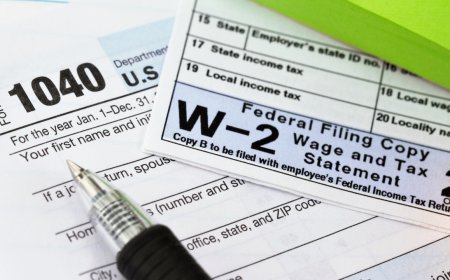
Most new hires fill out a few standard forms. The Form W-4 tells the employer how much federal income tax to withhold from each paycheck. The Form I-9 confirms the teen is allowed to work in the United States, which usually means bringing original documents such as a passport, or a combination like a school ID plus a Social Security card or birth certificate. Many states also have their own withholding form.
Some states require workers under a certain age to have a work permit or an employment certificate, often issued through the school. Rules vary by state, so check your state labor department's website or ask the school counselor before the first shift. Federal and state child labor laws also limit the hours younger teens can work, especially on school nights.
Why is the first paycheck smaller than expected?
This is the question almost every teen asks. If your teen works 20 hours at $14 an hour, the gross pay is $280. The take-home amount will be less because of deductions.
Two of those deductions apply to almost every job. Social Security tax is 6.2 percent of wages, and Medicare tax is 1.45 percent, together 7.65 percent. On $280, that is about $21. Federal income tax may also be withheld depending on the W-4, and many states and some cities take their own share. The money withheld for federal income tax is not necessarily lost. If a teen ends up owing little or no income tax for the year, filing a return can get some or all of it back.
Should my teen claim exempt on the W-4?
The W-4 has an option to claim exemption from federal income tax withholding. A worker can claim it only if they had no federal income tax liability last year and expect none this year. Many teens with small, part-time or seasonal earnings fall into that group, but not all do, especially if they work a lot of hours or have other income.
Claiming exempt only stops federal income tax withholding. Social Security and Medicare taxes still come out. If your teen is unsure, leaving withholding in place is the safer choice, because any extra withheld can usually be refunded by filing a return. An exempt claim also generally has to be renewed each year.
How do you read a pay stub?
Sit down together with the first pay stub. It is a great mini money lesson. Look for these parts:
- Gross pay: total earnings before anything is taken out.
- Deductions: Social Security, Medicare, and any federal, state, or local income tax.
- Net pay: the amount that actually lands in the account.
- Year-to-date totals: running amounts since January, useful at tax time.
Check that the hours and the hourly rate match what your teen actually worked. Mistakes happen, and learning to catch them early is a valuable habit. Keep pay stubs in a folder or take a photo of each one, since they are handy if a question comes up later.
What about tips?
Teens who work in restaurants, coffee shops, or delivery jobs may earn tips on top of their hourly pay. Tips count as income. Under IRS rules, employees who receive $20 or more in tips in a month are supposed to report them to their employer, usually through a simple tip log or the point-of-sale system, so the right taxes can be withheld.
Cash tips can feel like free money, which makes them easy to spend before they ever reach a bank account. A good habit is to deposit cash tips weekly and apply the same savings rule to them as to the paycheck. Keeping a small notebook or phone note of daily tips also makes tax time and budgeting easier.
Where should the paycheck go?
Many employers prefer direct deposit, and some offer pay cards. A teen checking account, often opened jointly with a parent, is usually the simplest setup. Look for an account with no monthly fee and no minimum balance, and turn on low-balance and spending alerts. Linking a savings account at the same bank makes it easy to move money with a tap.
If an employer offers a pay card instead, read the fee schedule. Some cards charge for ATM withdrawals or balance checks, which can chip away at a small paycheck.
What is a simple savings rule that actually sticks?
Complicated budgets do not survive the first trip to the mall. A rule that works for many teens is to save half of every paycheck the day it arrives, before spending anything. The other half is theirs to spend however they like.
Napkin math shows why this works. A teen who takes home about $250 every two weeks through the holiday season, for example, would save about $125 per paycheck. Over five paychecks, that is around $625 set aside, while still having money for gifts, food with friends, and fun. Families can tweak the split, such as 60 percent saved for a teen saving for a car, but the key is that saving happens first and automatically. Setting up an automatic transfer to savings on payday takes the willpower out of it.
Give the savings a name, too. A car fund, a spring break fund, or a laptop fund is more motivating than general savings.
Does my teen need to file a tax return?
It depends on how much they earn, what kind of income it is, and whether federal income tax was withheld. Many teens with modest wages are not required to file, but filing can still be worth it to get withheld income tax refunded. Teens who earn money from self-employment, such as babysitting or lawn care paid directly by neighbors, have different rules, because self-employment income of $400 or more generally requires a return.
The thresholds change each year, so check the IRS rules for the tax year in question. We cover those rules in detail in our separate guide to whether your teen needs to file.
The bigger lesson in a small paycheck
A first seasonal job teaches more than how to fold sweaters or run a register. It is a chance to learn how taxes work, how to read a pay stub, and how good it feels to watch savings grow. Before the first shift, sit down together, go over the forms, open the account, and agree on the savings rule. That one conversation can shape money habits long after the holiday season ends.
What's Your Reaction?
 Like
0
Like
0
 Dislike
0
Dislike
0
 Love
0
Love
0
 Funny
0
Funny
0
 Angry
0
Angry
0
 Sad
0
Sad
0
 Wow
0
Wow
0