






















Coin-Counting Machines: Fees, Free Options, and What Your Change Jar Is Worth
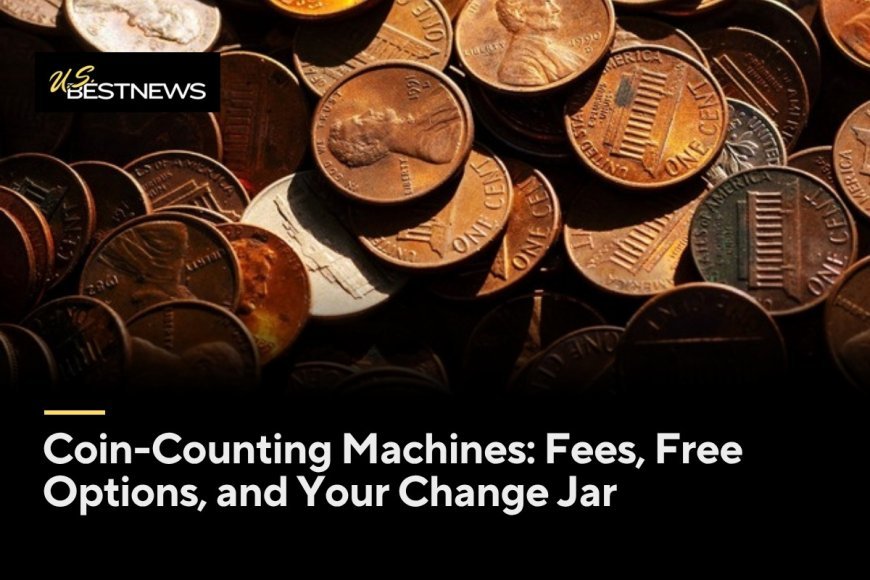
Almost every home has one: a jar, a mug, or an old coffee can slowly filling with change. Every so often, someone picks it up, feels the weight, and wonders what it is worth. Then comes the real question. Is it better to feed it into the green machine at the grocery store, haul it to the bank, or sit at the kitchen table rolling coins one by one?
Each option has a cost, whether it is a fee, a bit of time, or a limit on how you can use the money. This guide compares the main ways to turn coins into spending money, so you can pick the one that fits your jar and your patience. Fees change and vary by location, so treat the figures here as examples and check the screen or the bank's fee page before you pour.
First, estimate what your jar is worth
Before choosing a method, get a rough idea of the total. You do not have to count every penny. Sort out the quarters first, since they usually make up most of the value. Forty quarters is $10, so counting quarters in stacks of 40 gives you a quick running total. Add a rough count of dimes and nickels, and do not worry much about pennies.
Knowing whether you have $25 or $250 matters, because a percentage fee stings more on a big jar. It also helps you notice if a machine's count seems off. If your jar is mostly pennies, the total may be smaller than it feels, which can change which option makes sense.
Option 1: A coin kiosk, cash out
Coin kiosks in grocery stores are the most convenient choice. You pour the coins in, the machine counts them in a minute or two, and you take a voucher to the register for cash. The trade-off is the fee. Coinstar, the best-known kiosk company, says cash fees vary by location and can include a service fee of up to 15.9 percent plus a transaction fee of up to 99 cents. The exact amount appears on the screen before you start.
Here is what that looks like in napkin math. On a jar worth $80, a 12 percent fee would take about $9.60, plus any transaction fee. That is real money for a few minutes of convenience. If your jar is small or your time is tight, it may be worth it. If the jar is large, the fee grows with it.
A few tips make any kiosk visit smoother. Pick out buttons, paper clips, foreign coins, and lint before you pour, since debris can jam the machine or get coins rejected. Collect any coins that drop into the return slot and try them again or set them aside. Watch the running total on the screen, and take your voucher to the register promptly, because vouchers may need to be redeemed the same day or at that store.
Option 2: A coin kiosk, no-fee gift card or donation
Many kiosks let you skip the fee by choosing an eGift card instead of cash. Coinstar says most U.S. locations offer eGift card options with no fee, though choices vary by retailer, brand, and location. You get the full value of your coins, but only to spend at one store or restaurant.
This option works best if you pick a store you already shop at regularly, such as a big online retailer, a grocery chain, or a home improvement store. It is less useful if the money ends up on a gift card you forget about. A smart move is to choose a card for something you were going to buy anyway, then spend the cash you would have used on that purchase toward savings or a bill.
Some kiosks also let you donate your coins to a partner charity. You do not pay a fee, though Coinstar notes that it keeps a processing fee from donations, so the charity receives a bit less than the total you pour in. If you were planning to donate anyway, it is a painless way to do it. Keep the receipt if you want a record of the gift.
Option 3: Your bank or credit union
Some banks and credit unions have their own coin-counting machines in branches, and many will count coins for free for account holders. Others accept coins only if they are rolled, and some charge non-customers a fee. Policies vary widely, so call ahead or check the website.
The main advantage is clear: if your bank counts coins free, you keep every cent and can deposit it straight into savings. The downside is that fewer branches have machines than they once did, so you may have to look around. Credit unions are often worth checking because many focus on member perks.
Option 4: Roll them yourself
Rolling coins by hand is the slowest method, but it is usually free. Many banks give out paper coin wrappers at no cost, and inexpensive wrappers are sold at office supply stores. Each wrapper holds a set number of coins, such as 40 quarters for $10, 50 dimes for $5, 40 nickels for $2, and 50 pennies for 50 cents.
Once rolled, write your name and account number on each roll, since the bank may recount them, and deposit them at your branch. Some banks limit how many rolls they will take at once or accept rolled coins only from customers. Rolling can also turn into a family activity. Kids can sort and count, and you can offer them a share of the total as a reward, which costs less than a kiosk fee and teaches counting at the same time.
Option 5: Spend the coins directly
The simplest no-fee option is to use the coins. Many self-checkout lanes at grocery and big-box stores accept coins, and you can feed a handful in to cover part of your bill. Laundromats, parking meters, car washes, and vending machines are other good uses for quarters. Keeping a small stash of quarters in the car or by the laundry basket chips away at the jar without any special trip.
Do not dump a large pile on a cashier during a rush, though. Paying a few dollars in coins at a time is easier on everyone.
So which option is best?
It depends on what you value most:
- Want cash fast and have a small jar? A kiosk cash-out is easiest.
- Want the full value and shop at a partner store? Choose a no-fee eGift card.
- Want cash in your account with no fee? Try your bank or credit union first.
- Have time and want to keep every cent? Roll the coins yourself.
- Want to chip away slowly? Spend coins at self-checkout and laundromats.
Make the next jar work harder
Once the jar is emptied, give the next one a job. Label it for a specific goal, such as a holiday gift fund, a family pizza night, or a contribution to savings. Some families deposit coins into a savings account every few months, which turns loose change into a habit instead of clutter. A little planning means the next time you lift that heavy jar, you will know exactly where the money is going and how to get it there without giving up a slice to fees.
What's Your Reaction?
 Like
0
Like
0
 Dislike
0
Dislike
0
 Love
0
Love
0
 Funny
0
Funny
0
 Angry
0
Angry
0
 Sad
0
Sad
0
 Wow
0
Wow
0