























Delivery and Rideshare Driving in Winter: What Drivers Really Net After Gas and Wear
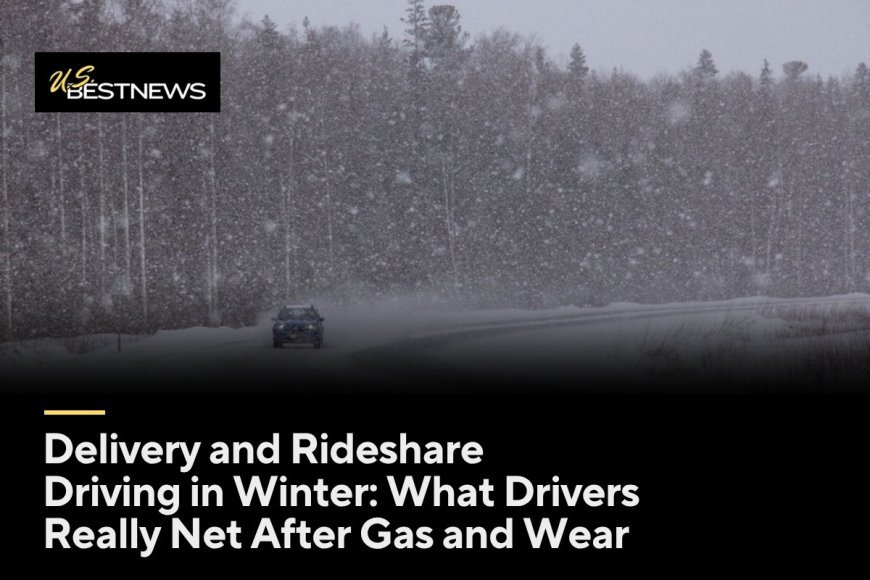
A busy winter shift can look better than it is. Snow slows traffic, orders and ride requests surge, and the app may show an eye-catching total by midnight. Then the driver fills the tank, notices new tire wear, drives home unpaid, and remembers that no employer has set aside tax. The number that matters is what is left after the car is paid for.
This is not an argument against gig driving. Flexible winter earnings help many households. It is an argument for counting like an owner, because the platform pays for completed trips while the driver supplies the vehicle, fuel, phone, insurance risk, and time between requests.
Start with the shift, not the app total
Pick one recent shift and write down five numbers: time you left home, time you returned, miles driven in total, money the app paid including tips, and any cash or bonus you can document. Total miles matter more than trip miles. The drive to a busy area, the return after a drop-off, and the slow circle while waiting all use fuel and tires without a passenger or meal in the car.
Divide gross pay by total hours door to door. That figure often feels less exciting than the app's active-time view, but it is the one you can compare with a part-time job. A snowy evening can raise demand while cutting trips per hour, so a higher gross can still mean a lower hourly result if traffic doubles every trip time.
Keep the record for at least a few ordinary shifts and a few bad-weather shifts. One great night proves demand existed that night. A two-week average tells you whether winter driving deserves space in your budget or is only useful as occasional extra cash when the right surge appears.
Fuel is only the first winter cost
Cold weather can reduce fuel economy, idling to stay warm uses fuel, and snow or slush adds rolling resistance and longer routes. Do not guess from the dashboard alone. Track gallons and miles over several fill-ups, or use your app or trip log to estimate a cost per mile. A simple personal cost-per-mile figure beats a national average because your vehicle and city are what you actually pay for.
Wear arrives quietly. Tires lose tread, brakes work harder, windshield fluid disappears, car washes multiply to clear salt, and a battery that was fine in October may fail on the coldest morning. Set aside a fixed amount per mile for maintenance and repairs in a separate account or note. If you never use it in January, it is waiting for the repair that winter was slowly creating.
Depreciation is the cost drivers feel last. Extra winter miles reduce the value of the car and bring major services closer. You do not need a perfect accounting model. A modest per-mile reserve for fuel plus maintenance plus future replacement is more honest than treating every payout as spendable income the moment it lands.
Unpaid time and risk decide many shifts
Ask how much of the shift was spent waiting, repositioning, walking into restaurants, finding an address in a snowbank, or helping a passenger with luggage. Some waiting is restful and some is pure cost. If a delivery zone regularly leaves you far from the next order, the return miles belong in the math even when the app calls the trip complete.
Winter raises the cost of a bad decision. Accepting a long trip into worsening weather can strand you far from home or leave you driving back empty on poor roads. Know when you will stop, keep a charged phone and emergency basics in the car, and do not let a bonus persuade you to drive beyond the conditions you judge safe. No surge pays for an accident.
Check your insurance situation before winter rather than after a claim. Personal auto policies and rideshare or delivery work do not always fit together in the way drivers assume, and platform coverage can depend on which phase of a trip you are in. Read the policy or ask your insurer what endorsement, if any, you need for the work you do.
Taxes and fees are not April surprises
Gig drivers are generally treated as independent contractors by the platforms, which means income tax and self-employment tax planning are the driver's job. Keep a simple record of payouts, mileage, parking, tolls, and work expenses as you go. Mileage records should be made close to the time of driving, with dates and business purpose, not rebuilt from memory at tax time.
Many drivers set aside a percentage of each payout in a separate savings account so quarterly or year-end taxes do not consume money already spent. The right percentage depends on your household income, deductions, state, and other work. If gig income becomes a major share of what you earn, a tax professional or IRS guidance on estimated taxes is worth the cost before penalties enter the picture.
Do not double-count. If you use a mileage-based method for vehicle costs at tax time, you cannot also treat the same miles casually in your own tracking without understanding the difference. Your weekly business decision only needs a consistent estimate. Your tax return needs the method and records the IRS requires, so keep the raw miles and receipts either way.
Keep a one-page winter driving log
A notebook or phone note with six columns is enough: date, hours from leaving to returning home, total miles, app pay, tips or bonuses, and fuel or charging and parking costs. Add a seventh column after the shift for how the roads and your body felt. That last column explains results that numbers alone make mysterious, and it helps you refuse the conditions that produced your worst nights.
Once a week, turn the log into one rate: total pay minus your vehicle reserve and work costs, divided by door-to-door hours. Compare it with what you could earn in a warehouse, shop, or care shift that week. Gig work wins some weeks and loses others. The log stops a single busy Saturday from making policy for the whole winter.
Keep business and personal trips separate in the same log. If you drive home past a shop and stop for family groceries, note where the business portion ended. Clean contemporaneous records are easier for taxes and much easier for your own decisions. A log you trust is worth more than a motivational video about hustle.
A winter rule you can use before accepting work
Before a shift, set three limits: the latest time you will stay out, the minimum door-to-door hourly result you want after estimated car costs, and the weather line that sends you home. Review after the shift instead of renegotiating with yourself in a parking lot at midnight. Limits protect both the car and the driver from a slow slide into unprofitable hours.
Try a two-column note for one week. On the left, gross pay and hours. On the right, miles multiplied by your personal vehicle reserve, plus parking, tolls, and a tax set-aside. The remaining figure is closer to your real winter wage. If it still beats your alternatives and fits your life, drive with confidence. If it does not, you have found the problem early.
The bottom line is that winter can be good gig season, but only for drivers who count the whole shift. Demand is real, tips can be generous, and flexible hours matter. So do tires, fuel, unpaid miles, and sleep. Pay the car first, set aside the tax, and let what remains tell you whether the night was worth it.
What's Your Reaction?
 Like
0
 Dislike
0
 Love
0
 Funny
0
 Angry
0
 Sad
0
 Wow
0