























Updated 2026: You’ll Be Shocked at How Much Americans Spend on Groceries Each Month!
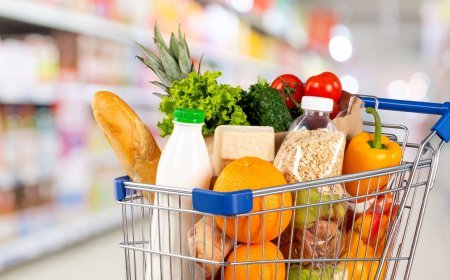
Grocery bills continue to shock many American households in early 2026, as food prices edge higher amid ongoing supply chain pressures, weather impacts on produce, and record-low cattle herds driving up meat costs. With inflation in food-at-home prices projected to rise about 2.3% this year (slower than recent peaks but still noticeable), families are feeling the pinch more than ever. The latest data from the Bureau of Labor Statistics (BLS), USDA, and consumer reports paints a clear picture: real spending often exceeds what people expect or budget for.
Here's the updated breakdown of average monthly grocery costs (food at home, excluding dining out) as of January 2026, based on the most recent BLS Consumer Expenditure Survey data (through 2024 with 2025–2026 adjustments), USDA Cost of Food reports (December 2025/January 2026 figures), and other tracking sources.
National Average Grocery Spending
The average U.S. household spends around $504–$519 per month on groceries (food at home), per BLS data for recent years with slight upward tweaks for 2026 inflation. This averages across all household sizes—from singles to large families—so individual experiences vary widely.
- Per person: Roughly $370–$400 per month on average, though some surveys (like Empower or consumer dashboards) report closer to $500+ when including broader habits.
- Total food spending: When adding dining out/takeout, monthly food costs climb to $847–$1,000+ per household.
- Annual perspective: Groceries alone average $6,000–$6,500 yearly per household, with total food (including restaurants) around $10,000+.
These are real-world averages—many overspend due to convenience items, impulse buys, or regional price differences.
USDA Benchmarks: What a Nutritious Diet "Should" Cost
The USDA's monthly Cost of Food reports (latest from December 2025, with January 2026 updates reflecting CPI adjustments) provide realistic plans for a healthy, home-cooked diet:
- Thrifty plan (tight but nutritious): For a family of four (two adults 20–50, two children 6–11), about $988–$1,002 per month (around $228–$230 weekly). This is the baseline for programs like SNAP.
- Low-cost plan: Typically $1,200–$1,300.
- Moderate-cost plan: Around $1,400–$1,500.
- Liberal plan (more variety/flexibility): Up to $1,600–$1,631.
For smaller households:
- Single adult (20–50): $250–$400 (thrifty to moderate).
- Couple: $500–$800.
These are minimums for balanced nutrition—real spending often exceeds them due to preferences, convenience, or higher local prices.
Why Grocery Bills Feel So High Right Now
Food-at-home prices rose about 2–3% year-over-year into 2026, with spikes in eggs, beef (ground beef at record highs), dairy, and produce from weather/drought issues. BLS data shows food-at-home up ~3% in recent months, and USDA forecasts a 2.3% increase for 2026 overall.
Regional variations matter: Costs are 20–35% higher in places like Hawaii or Alaska, while Midwest/South states trend lower.
Tips to Keep Your Grocery Bill in Check
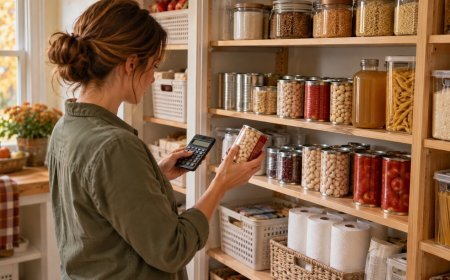
- Track spending for a month (apps like Mint or PocketGuard help) to spot leaks.
- Use USDA plans as a guide—shop sales, buy in bulk for staples, and meal plan around cheaper proteins (beans, eggs, chicken).
- Opt for store brands, seasonal produce, and frozen/canned options.
- Cut waste: Freeze extras and use leftovers creatively.
- Limit processed/convenience items—they inflate costs fast.
Grocery spending is a top budget stressor in 2026, but small tweaks can make a big difference. What's your average monthly grocery bill lately? Share in the comments—let's compare notes! These figures are national averages; your actual costs depend on family size, location, and habits.
What's Your Reaction?
 Like
0
Like
0
 Dislike
0
Dislike
0
 Love
0
Love
0
 Funny
0
Funny
0
 Angry
0
Angry
0
 Sad
0
Sad
0
 Wow
0
Wow
0