

























Beginner’s Guide to Roth vs. Traditional Accounts: Which One Fits Your 2026 Goals?
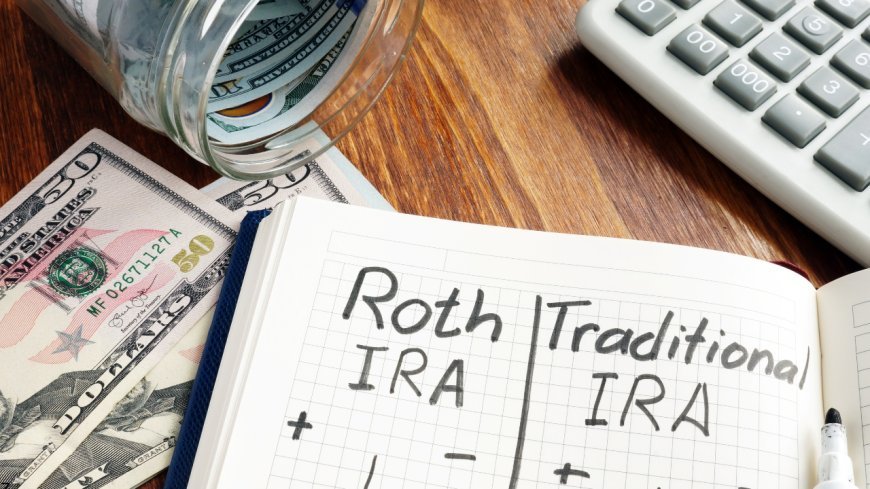
Retirement accounts like Roth and traditional options (IRAs and 401(k)s) remain powerful tools in 2026 for building tax-advantaged wealth. The core difference lies in timing: traditional accounts give you an upfront tax break on contributions (reducing taxable income now), while Roth accounts let you pay taxes today for tax-free growth and qualified withdrawals later. With contribution limits rising—$7,500 for IRAs (plus $1,100 catch-up for age 50+) and $24,500 for 401(k)s (plus $8,000 catch-up for 50+, or $11,250 for ages 60–63)—and a stable but evolving tax landscape, choosing the right type depends on your current tax bracket, expected future bracket, age, income, and retirement timeline. Many beginners start with employer plans (if available) for matches, then layer in IRAs for flexibility.
How Traditional Accounts Work: Tax Break Now, Taxes Later
Traditional IRAs and 401(k)s let you contribute pre-tax dollars (or deductible for IRAs if eligible), lowering your taxable income in the contribution year. Investments grow tax-deferred, meaning no taxes on dividends, interest, or gains until withdrawal. In retirement (age 59½+), distributions are taxed as ordinary income. This structure shines if you expect to be in a lower tax bracket during retirement—perhaps due to reduced income, fewer deductions phased out, or strategic planning. Traditional 401(k)s often include employer matches (always pre-tax), and IRAs have no income limits for contributions (though deductibility phases out if you or your spouse have workplace coverage). Required minimum distributions (RMDs) start at age 73 (or later under current rules), forcing withdrawals even if unneeded.
How Roth Accounts Work: Pay Taxes Now, Enjoy Tax-Free Later
Roth IRAs and Roth 401(k)s use after-tax contributions—no upfront deduction—but qualified withdrawals (after age 59½ and a 5-year holding period) are entirely tax-free, including earnings. Growth happens tax-free, and Roth IRAs have no RMDs during your lifetime, offering flexibility for heirs or late-retirement needs. Roth 401(k)s do require RMDs unless rolled over to a Roth IRA. This option excels if you anticipate higher taxes in retirement (due to rising brackets, more income sources like Social Security, or policy changes) or want tax diversification. Roth IRAs have income limits for direct contributions (2026 phase-out starts at $153,000 MAGI for singles/$242,000 joint, full ineligibility at $168,000/$252,000), but Roth 401(k)s have no such limits.
Key 2026 Limits and Eligibility at a Glance
- IRA Contribution Limit: $7,500 (under 50) or $8,600 (50+ catch-up) for both traditional and Roth combined.
- 401(k) Contribution Limit: $24,500 (under 50), plus $8,000 catch-up (50+), or $11,250 for ages 60–63 in many plans; total employee + employer up to $72,000+.
- Roth IRA Income Limits: Full contribution if MAGI under $153,000 (single)/$242,000 (joint); partial between phase-out ranges; none above. No limits for Roth 401(k).
- Traditional IRA Deductibility: No income limit for contributions, but deductibility phases out based on income and workplace plan coverage.
Which Fits Your 2026 Goals? Decision Factors Choose traditional if you're in a high tax bracket now (e.g., peak earning years) and expect lower taxes in retirement—maximizing the upfront deduction provides immediate savings that can compound. It's often ideal for those with employer matches or high current income. Opt for Roth if you're in a lower or moderate bracket today (especially early career), expect tax rates to rise, or value tax-free inheritance/flexibility—no RMDs mean more control over withdrawals. Many experts recommend a mix: contribute enough to traditional 401(k) for the match, then prioritize Roth IRA (if eligible) or Roth 401(k) for diversification. Backdoor Roth conversions remain viable for high earners ineligible for direct Roth IRA contributions.
Practical Steps for Beginners
- Check employer plan options first—grab any match (free money).
- Open an IRA at a low-cost broker (Vanguard, Fidelity, Schwab) for flexibility.
- Automate contributions to build the habit.
- Reassess annually: as income or brackets change, you might shift strategies.
- Consider consulting a tax advisor for personalized math—tools like Roth conversion calculators help model scenarios.
In 2026's environment—with higher limits, permanent lower individual rates from recent laws, and potential future tax pressures—Roth often edges out for younger or moderate-income beginners due to tax-free growth potential. Traditional suits higher earners seeking immediate relief. The best choice aligns with when you want the tax advantage: now or later.
This article is for informational purposes only and not financial or tax advice. Limits and rules can change—verify with IRS.gov or a professional. Investing involves risk; past performance doesn't guarantee future results.
What's Your Reaction?
 Like
0
Like
0
 Dislike
0
Dislike
0
 Love
0
Love
0
 Funny
0
Funny
0
 Angry
0
Angry
0
 Sad
0
Sad
0
 Wow
0
Wow
0