

























Last-Minute 2025 Tax Deductions You Can Still Claim in 2026 (Don't Miss These)

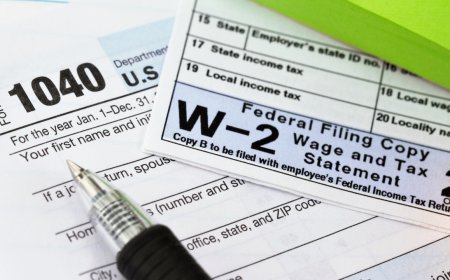
With the 2026 tax filing season in full swing as of late January, many people are rushing to complete their 2025 federal income tax returns (due April 15, 2026, or October 15 with an extension). Recent changes from the One Big Beautiful Bill Act (OBBBA), signed in mid-2025, have altered several rules, but key opportunities remain for the 2025 tax year. Overlooked deductions and credits—especially those tied to home offices, charitable giving, and energy improvements—can still reduce your taxable income or provide direct credits if you qualify and have the right documentation. These are particularly valuable now, as some benefits expire or face restrictions starting in 2026.
Acting quickly is essential, since the filing window is open and IRS tools like Free File are available. Gather receipts, Forms 1098 or 1099, and any qualifying records to avoid missing out. Below are some of the most commonly overlooked deductions and credits for the 2025 tax year that you can still claim when filing in 2026, focusing on home office setups, charitable contributions, and energy-related incentives.
1. Home Office Deduction for Self-Employed Workers
If you’re self-employed or run a side business and used part of your home regularly and exclusively for work in 2025, the home office deduction remains available. This lets you deduct a portion of rent, mortgage interest, utilities, insurance, repairs, and other home expenses based on the square footage used for business. The simplified method—$5 per square foot up to 300 square feet (max $1,500)—is straightforward and requires minimal records, while the actual expense method can yield larger savings if you track bills carefully.
Many overlook this because they assume it’s only for full-time remote employees, but it applies to freelancers, gig workers, and small business owners too. Double-check eligibility: the space must be your principal place of business or used for meeting clients. Claim it on Schedule C if self-employed. This deduction could save hundreds or thousands, especially if utility costs rose in 2025.
2. Charitable Contributions (Cash and Non-Cash Donations)
Itemizers can deduct qualifying charitable gifts made in 2025, including cash, clothing, household items, or even vehicles donated to qualified organizations. The limit is generally up to 60% of your adjusted gross income for cash donations, with non-cash items valued at fair market value (receipts required for donations over $250). Even small overlooked gifts—like out-of-pocket expenses for volunteer work or mileage driven for charity—can add up.
This is often missed because people forget to tally non-cash items or assume only large donations count. Gather acknowledgment letters from charities and use IRS tools to value donated goods. Note that 2026 brings new limits (like a 0.5% AGI floor for some deductions), making 2025 a better year to maximize this if you itemize. It’s a powerful way to lower taxable income while supporting causes you care about.
3. Energy Efficient Home Improvement Credit (25C)
Homeowners who made qualifying energy-efficient upgrades in 2025—such as installing energy-efficient windows, doors, insulation, heat pumps, furnaces, boilers, or biomass stoves—can claim this credit. It covers 30% of costs, with an annual cap often around $1,200 (higher for certain items like heat pumps). The credit applies to improvements placed in service by December 31, 2025, so if you completed work last year, claim it now on Form 5695.
This is frequently overlooked because people delay filing or miss manufacturer requirements (like including Qualified Manufacturer IDs for 2025 installations). It’s non-refundable but directly reduces your tax bill. With the credit ending for post-2025 installations due to OBBBA changes, this is a last-chance opportunity for 2025 upgrades. Average claims have provided meaningful savings, often in the hundreds to over a thousand dollars.
4. Residential Clean Energy Credit (Solar and More)
If you installed solar panels, solar water heaters, geothermal heat pumps, small wind energy systems, or fuel cells in 2025, the Residential Clean Energy Credit offers 30% of qualified costs with no annual cap (though lifetime limits may apply in some cases). This credit was available for purchases and installations completed by the end of 2025 and is claimable on your 2025 return.
Many homeowners miss this if they overlook receipts or assume it only applies to new builds—it works for existing homes too. The credit is non-refundable but can carry forward if unused. OBBBA accelerated its phase-out, so 2025 is the final year for full eligibility in many scenarios. This can translate to thousands in savings for significant installations, making it one of the biggest overlooked credits this season.
5. Other Quick Overlooked Items Tied to These Areas
Beyond the main three, scan for related deductions like state and local taxes (SALT, with a higher cap under recent changes), student loan interest, or medical expenses exceeding 7.5% of AGI if itemizing. For home office users, don’t forget depreciable items like computers or furniture used in the space. Charitable mileage (at the 2025 rate) is another easy add-on if you drove for volunteer work.
These overlooked deductions and credits can add up to substantial savings—potentially $1,000 or more—when claimed correctly. Review your records, use IRS Free File or reputable software to guide you, and consider consulting a tax pro if your situation is complex. Filing accurately now prevents amendments later and maximizes your refund or minimizes what you owe for 2025. Don’t let these slip away—grab your documents and get started today!
What's Your Reaction?
 Like
0
Like
0
 Dislike
0
Dislike
0
 Love
0
Love
0
 Funny
0
Funny
0
 Angry
0
Angry
0
 Sad
0
Sad
0
 Wow
0
Wow
0