


























'Your Bank' Is Sending a Courier for Your Card: The Card-Collection Scam Explained
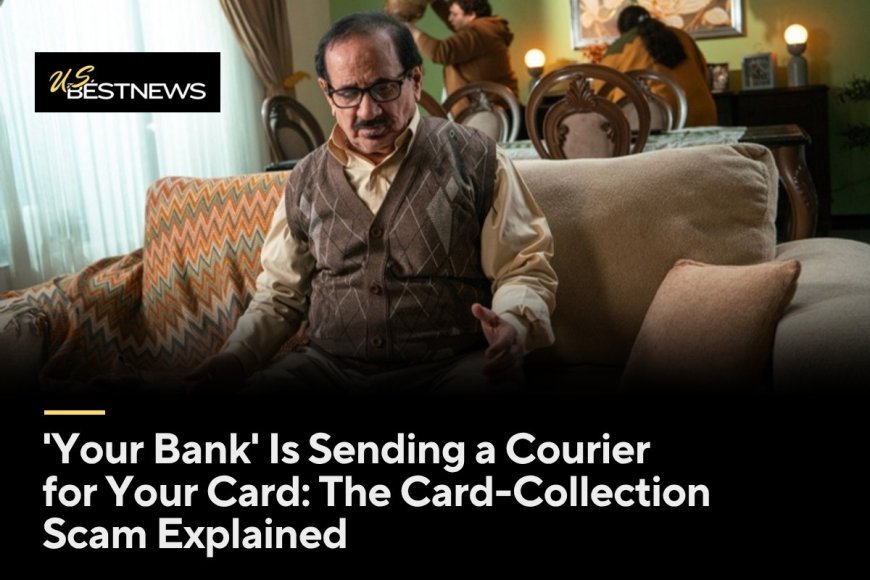
It is a quiet Tuesday afternoon. The phone rings, and the caller ID shows what looks like your bank's name. A calm, friendly voice says it is from the bank's fraud team. It has spotted a suspicious charge on your debit card and wants to confirm a few details. It already knows your name, and maybe your address.
Within ten minutes, the caller has asked for your card PIN and said a courier will stop by to collect your card. That is the card-collection scam. It is also called courier fraud, and police and banks warn that it often targets older adults. Most of the public warnings come from police and banks in the United Kingdom, where the card version is best documented. The FBI has warned about the same courier tactic in the United States, and the logic of the scam is identical on both sides of the Atlantic. Here is how it goes, step by step, and what is really happening at each stage.
Stage 1: The call about "fraud"
What they say: "We have detected fraudulent activity on your account. Someone is trying to use your card right now."
What is really happening: Nothing is wrong with your account. The caller wants you frightened and focused on a problem that only they can fix. Report Fraud, the UK police service that tracks these cases, says the caller may know basic details about you, such as your name and address, to build trust. The caller ID can look right too, because phone numbers can be faked.
Stage 2: "Call your bank to check"
What they say: "Don't take my word for it. Hang up and call the number on the back of your card."
What is really happening: This sounds reassuring, and it is a trick. UK police and the BBC both warn that scammers may stay on the line at their end after you hang up. When you pick the phone back up, you are still connected to them, and a second person says, "Thank you for calling the bank."
The fix is simple: wait at least five minutes, or use a different phone, before calling your bank. You can also skip the phone entirely and use your bank's app or walk into a branch.
Stage 3: "Please confirm your PIN"
What they say: "To cancel the fraudulent transaction, I need you to enter your PIN on your phone keypad."
What is really happening: The PIN is the key to your account. Report Fraud says these callers may ask you to read out your PIN or type it on the keypad, and may ask about other accounts you hold. Once they have the PIN and the card, they can withdraw cash. The FTC's advice is just as direct: do not give account information over the phone unless you made the call.
Stage 4: "A courier will collect your card"
What they say: "Your card has been compromised. We are sending a courier to pick it up and a new one is on the way." Some callers add that you should write your PIN on a note and put it in a separate envelope for the driver.
What is really happening: The courier works for the scammer. Sometimes a person turns up at your door in smart clothes, or even dressed like an officer. UK bank TSB has described a case where a scammer arrived with a police badge and walked away with a card and PIN. Anything handed over is gone.
The same trick is used for cash and valuables. The FBI has warned that criminals impersonating banks, tech support and government officials send couriers to collect cash and gold from victims at home, and the FBI said it saw more than $55 million in losses from May to December 2023.
Stage 5: Pressure and secrecy
What they say: "Do not tell anyone, including the staff at your branch. This is an undercover investigation." Or: "You must act now, or your money will be lost."
What is really happening: Urgency and secrecy are the scam's best tools. Real banks give you time to think. The FTC says to never move money, or hand it off, to "protect" it in response to an unexpected call. A real organization will not mind if you hang up and check.
Why smart people fall for it
This scam works because every step sounds like the bank protecting you. The caller seems worried on your behalf, offers to let you verify the call and promises a replacement card. Fear is doing the work. When you are alarmed, it is hard to notice that a real bank would never need you to hand over the thing it says is compromised, or to tell it your secret number.
It also helps to remember what the bank already knows. Your bank has your account number, your address and your card details. It does not need your PIN to protect you, and it can block or reissue a card on its own, with no courier.
The one rule to remember
Banks do not send couriers to collect your card, and they never ask for your PIN. That is it. If anyone asks for either, it is a scam, no matter how professional they sound, what they already know about you or what number appears on your screen.
UK banks and police say the same about cash, jewelry and other valuables. In the U.S., the FTC adds that government agencies will never tell you to hand cash or gold to a courier either. If a request involves a person arriving at your door, stop.
What to do if the phone rings
Do not argue and do not play along. Just hang up. Then wait several minutes or use a different phone, and call your bank at the number on your card or in its app. Ask whether anyone contacted you. If you want to report the call, go to ReportFraud.ftc.gov. For scams involving couriers, the FBI also takes reports at ic3.gov.
What to do if you already handed over the card or PIN
Do not be embarrassed. These scams fool smart, careful people. What matters is speed.
Call your bank right away, using a number you trust, and say exactly what happened, including that you gave your PIN. Ask it to cancel the card and any linked cards, and to freeze or monitor your accounts. Check your recent transactions and change your online banking password. Report it to the FTC at ReportFraud.ftc.gov, and to the FBI at ic3.gov if a courier was involved. Tell your local police too, particularly if someone came to your door.
Whether your bank will cover the loss depends on the details, and you should not assume either way. The FTC says that for debit cards, how much you could be responsible for depends on how quickly you report. The CFPB says unauthorized transfers include those made by someone who got a card through fraud, so describe exactly how the card left your hands, and keep notes of each call.
Talk about it with the people you love
If a parent or grandparent lives alone, share this one sentence: "The bank will never send anyone to pick up your card." Agree on a rule that they will call you or another trusted person before they hand anything to anyone. It is much easier to say "my family told me to check" than to say no to a stranger on the phone.
What's Your Reaction?
 Like
0
Like
0
 Dislike
0
Dislike
0
 Love
0
Love
0
 Funny
0
Funny
0
 Angry
0
Angry
0
 Sad
0
Sad
0
 Wow
0
Wow
0