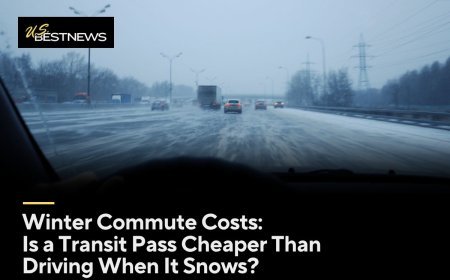




















Winter Commute Costs: Is a Transit Pass Cheaper Than Driving When It Snows?
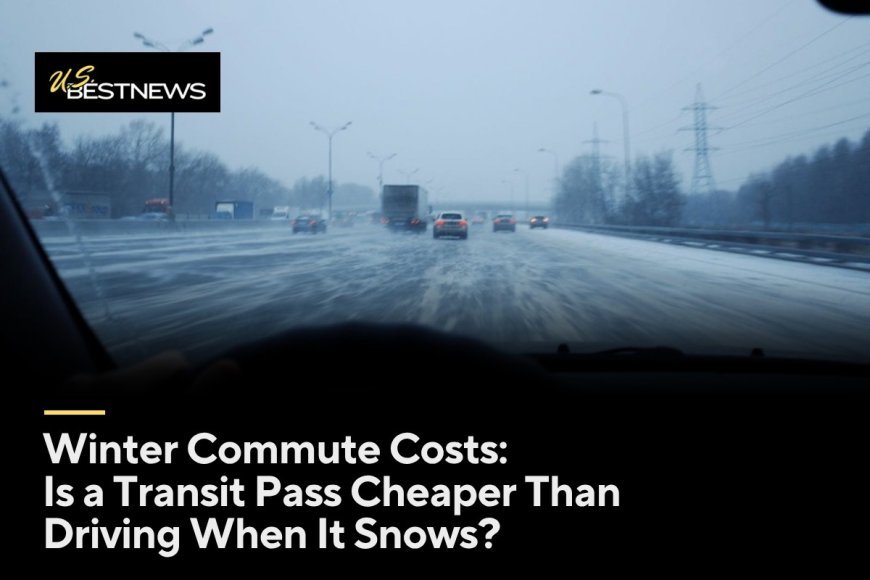
The first morning you scrape frost off your windshield, the commute stops feeling free. That is usually the moment people start wondering whether a monthly transit pass might beat driving once snow, slush and early darkness arrive.
The honest answer is that it depends on your route. It is mid-October, so you have time to run the numbers before winter hits and before your employer's benefit deadlines pass. Below are three example commuters, then a simple way to check your own.
How we are counting
To keep the comparison fair, we count only the costs that change depending on how you commute: fuel, wear and tear, parking and tolls. Car payments and insurance stay the same either way, so they do not belong in this comparison unless you would sell a car.
AAA's 2026 Your Driving Costs study puts the full cost of owning and running a new vehicle at about $12,863 a year, but most of that is depreciation, financing and insurance. For a commute decision, the useful pieces are fuel, which AAA priced at about $4.15 a gallon in its September 2026 study, and maintenance, repair and tires, which work out to roughly 10 to 13 cents a mile for the models AAA compared. We used 12 cents.
Winter adds a twist. The Department of Energy says a conventional gas car's fuel economy in city driving is roughly 15 percent lower at 20 degrees than at 77 degrees, and as much as 24 percent lower on short 3 to 4 mile trips. Hybrids can lose even more. So we cut each car's mpg by those amounts. All the numbers below assume 21 workdays a month, a car that gets 28 mpg, and are illustrations, not quotes.
Commuter one: Dana, the long suburban drive
Dana drives 18 miles each way into the city and pays $12 a day to park. In winter that is 36 miles a day at about 24 mpg.
Fuel comes to about $6.30 a day, wear and tear about $4.30, and parking $12, for roughly $22.60 a day or about $475 a month.
A transit pass is a different story. Suppose the express bus pass costs $120 a month and Dana adds $20 for the occasional rideshare when service is slow. That is about $140, so the pass could save roughly $335 a month. For Dana, snow makes the driving side more expensive, not less.
Commuter two: Marcus, the short hop
Marcus lives 4 miles from work and parks for free. Short trips are the worst case for cold weather, so we cut his mpg by 24 percent, to about 21.
Fuel is about $1.55 a day and wear and tear about $1, so driving costs roughly $53 a month. A $120 pass would cost more than twice that.
Marcus should keep driving, or consider walking or biking on dry days. The only reason for a pass would be if he wants to avoid driving on the worst snow days, and then buying single rides when needed will likely cost far less than a full-month pass.
Commuter three: Priya, the park-and-ride
Priya works 30 miles from home, and downtown parking runs $15 a day. Driving the whole way costs about $10.50 in fuel and $7.20 in wear and tear, plus parking, for about $32.65 a day, or roughly $685 a month.
Her alternative is to drive 4 miles to a commuter rail station, pay $4 a day for the lot and ride in. With a $170 monthly rail pass, she would spend about $307 a month, saving around $380. Park-and-ride often works well because it cuts the part of the trip that costs the most, which is long highway miles and downtown parking.
What these examples teach
Notice the pattern. The pass wins when parking is expensive and the drive is long. Driving wins when the trip is short and parking is free. The middle cases depend on details you can look up in a few minutes: your pass price, your parking rate and your real mileage.
Time and comfort count too, but keep them separate from the dollars. Some people value the extra half hour to read or rest. Others cannot afford a slower trip or a bus that runs only twice an hour. There is no wrong answer, as long as you know what the difference costs.
What changes on the snowy days
The averages above smooth out the worst mornings, so it helps to think through what a bad day actually costs on each side.
If you drive, a storm can mean slower traffic and more time with the engine running, which burns extra fuel. It can also mean a garage or lot that fills up, a snow emergency parking rule that moves your car or a ticket you did not plan on. Check your town's snow parking rules now, not after the first storm.
If you ride, a storm can mean delays, a longer walk in slush and a missed connection. The cost there is mostly time and comfort, plus the occasional rideshare when service stops. Leave a little earlier, keep a charged phone and know the next bus or train in both directions.
A mixed approach can be the cheapest of all. Some people ride most days and keep the car for the few days a month when transit is unreliable. If you only need the car occasionally, ask your insurer whether a lower annual mileage changes your rate. It may not, but it is a free question.
Do your own math in ten minutes
Step one: write down your round-trip miles and your car's real-world mpg, then subtract about 15 percent for winter. Multiply miles by 12 cents for wear and tear. Add fuel, parking and tolls. Multiply by the number of days you commute.
Step two: price the alternative. Check the monthly pass and a single fare on your transit agency's website, and add any rideshare or last-mile cost. Include the lot fee if you park at a station.
Step three: compare, then ask what happens on bad days. If service gets delayed in snow, do you have a backup, such as a coworker, a flexible start time or a work-from-home day? A cheap pass is only a bargain if it gets you to work.
Two ways to pay less before winter hits
Ask about pre-tax commuter benefits. Some employers let you set aside pre-tax pay for transit and parking. For 2026, the IRS limit is $340 a month for transit passes and a separate $340 a month for qualified parking. Signing up can lower your effective cost, though enrollment rules vary, so ask HR when the next sign-up window closes.
Ask about discounts. Many transit agencies offer reduced fares for seniors, students and people with lower incomes, and some employers subsidize passes. A five-minute call or web search could knock real money off the price.
A trial run beats a guess
If you are still unsure, try the transit option for a couple of weeks before buying a monthly pass, using single rides or a weekly pass if one exists. Note your real door-to-door time and what you actually spent.
The takeaway is that winter can tilt the math toward transit when your drive is long and parking is pricey, but it rarely rescues a pass for a short drive. Prices and schedules vary, so use your own numbers rather than anyone's averages.
What's Your Reaction?
 Like
0
Like
0
 Dislike
0
Dislike
0
 Love
0
Love
0
 Funny
0
Funny
0
 Angry
0
Angry
0
 Sad
0
Sad
0
 Wow
0
Wow
0