









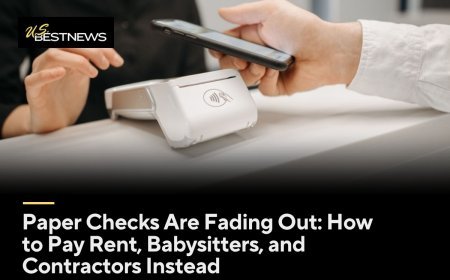













Paper Checks Are Fading Out: How to Pay Rent, Babysitters, and Contractors Instead
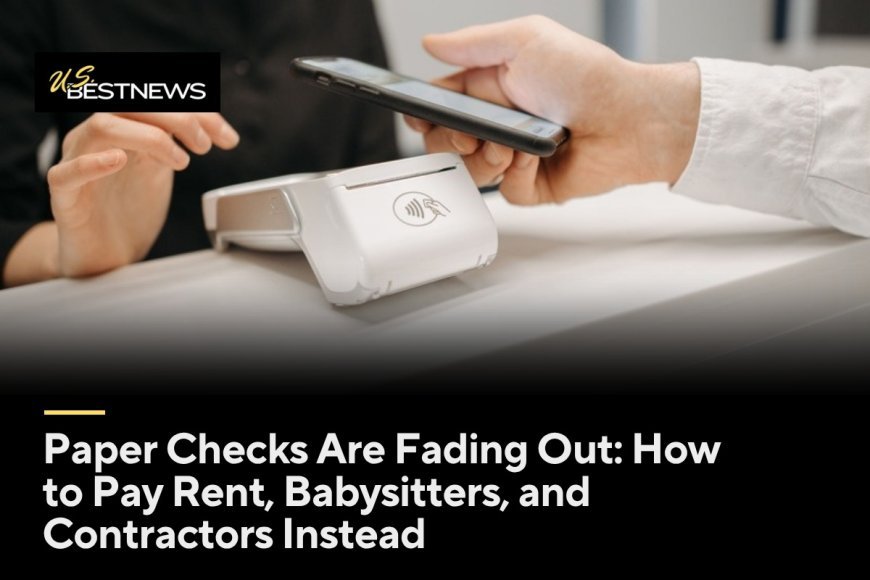
The landlord has always taken a check, the babysitter has always taken a check, and the contractor who fixed the steps left an invoice with a mailing address. Then the checkbook runs out, a check arrives nine days late, or someone asks, reasonably, whether there is a faster way that still leaves proof you paid.
Paper checks are not gone, and for a few situations they remain useful. They are simply no longer the default tool for every household payment. The trick is matching the replacement to the payee. Rent, a teenager next door, and a licensed contractor need different records, fees, and protection.
Why checks frustrate both sides now
A check carries your bank routing and account numbers in plain view, can be stolen or altered in the mail, and may take days to arrive and more days to clear. The person depositing it by phone may face holds, while the person who wrote it cannot always tell whether it was received. That uncertainty is why landlords and tradespeople increasingly prefer a payment they can see.
Do not throw the checkbook away in a fit of modernity. A check can still suit a one-off payment where the payee wants paper, a wedding gift you want to present physically, or a situation where electronic options would add fees. The goal is not to ban checks. It is to stop using the slowest and most exposed method for monthly payments that can be scheduled and tracked.
Before switching any regular payee, ask three things. What methods do you accept? Is there a fee for any of them, and who pays it? What reference should I include so you credit the right month, invoice, or child? A surprising number of payment arguments are really missing-reference arguments wearing a technology costume.
Rent: get the landlord's system in writing
For rent, prefer the landlord or property manager's official portal, bank bill pay, or another method named in the lease or a written notice. If the landlord asks you to switch, ask for the instruction in writing and check whether there is a convenience fee for card payments. A fee that looks small can become a real monthly cost, while an ACH or bank transfer option may carry no fee to you under that system.
Bank bill pay sends money from your account on a date you choose, and many banks will mail a paper check for you if the landlord cannot receive electronically. That can be better than your own check because the funds and delivery are handled through the bank's system, but processing times vary. Schedule several days early until you know how your bank and landlord count delivery and posting.
Whatever method you use, the memo or reference should identify the property and month. Keep the confirmation and your bank record together. If you pay a roommate who then pays the landlord, your record shows you paid the roommate, not the landlord. That distinction matters if the second payment never happens. Pay your share in a way the lease and landlord recognize whenever you can.
Babysitters, cleaners, and household help
For an occasional babysitter, person-to-person payment apps, cash with a written receipt, or an instant bank transfer can all work if both sides agree. Ask before the evening, not while a tired teenager is standing at the door. Put the amount, hours, and date in the message or receipt. Parents get a record; the sitter is not left wondering whether a friendly payment was for four hours or five.
Regular household help is different. A nanny or recurring caregiver may be a household employee for tax purposes, which is covered separately in this week's piece on household employment taxes. Do not let an app payment hide an employment relationship. Occasional babysitting in the sitter's home or a commercial service is a different pattern from a set-schedule nanny in your home, and the paperwork follows the reality.
For cleaners, dog walkers, and tutors, ask whether they invoice through a service that accepts bank payment or card. Card payment may add a fee but can bring clearer receipts and a route to dispute a charge for a service never provided. Cash is not wrong, but agree the amount before the work and send a text confirming payment the same day. Memory is a poor filing cabinet.
Contractors: invoices, deposits, and proof
A contractor should give an invoice or contract that names the business, the work, the total or rate, the deposit, and the payment schedule. Pay by a method tied to that invoice. Bank transfer, card, financing you deliberately choose, or a check recorded against the invoice can all be defensible. A request to pay a personal app account under a different name, with no invoice, deserves a pause.
Never let urgency erase the paper trail. Storm damage and broken furnaces create pressure, but you can still photograph the invoice, confirm the business name, and pay through a channel that produces a record. Avoid paying the full job before work begins unless the contract, licensing, and local practice justify it. Stage payments around completed milestones where the agreement allows.
If a contractor offers a cash discount, ask whether the price, warranty, and invoice remain the same. Cash without a receipt can be expensive when a repair fails. Before sending a large transfer, call the contractor on a number you already trust and confirm the destination. Payment instructions sent by a hacked email account are a modern version of the stolen check, only faster.
A safety routine for every new payment method
Whenever a payee gives new bank or app details, verify them through a contact route you already trust. If your landlord's email suddenly changes the payment destination, call the office number from the lease. If a contractor texts new instructions before a large payment, call the number on the signed contract. Verification feels awkward for ten seconds and can prevent a loss that politeness would have funded.
Reconcile weekly while a new method is bedding in. Check that rent left on the intended date, the sitter received the agreed amount, and a contractor payment matched the invoice stage. Set alerts for payments above an amount you choose. A small error found in the same week is usually a correction. The same error found after a tenancy or job ends can become an argument about memory.
Teach anyone else who pays from the household the same routine. A partner, older parent, or adult child may pay a tradesperson while you are away. Put the payee table and verification rule where they can find it. Household payment safety fails most often at the handoff between two well-meaning people, each assuming the other checked.
Choose the method by record, fee, and reversibility
Make a small household table. For each regular payee, note the accepted methods, any fee, how many days it takes, and what proof you receive. Rent may belong on scheduled bank bill pay. A babysitter may prefer an app. A contractor may invoice by card or bank transfer. A gardener may still take a check. The table ends the monthly scramble of searching old messages for how you paid last time.
Remember that speed and reversibility pull in opposite directions. Some instant payments are hard to reverse if you send them to the wrong person or are tricked. Cards may offer dispute routes but can add fees and debt if you carry a balance. Bank bill pay is calm and scheduled but not instant. Pick the risk you understand for the size of the payment.
Paper checks taught households a useful habit: name, date, amount, and purpose in one place. Keep that habit in every replacement. A payment with a clear reference and a saved confirmation is better than a check lost in the mail. The checkbook can retire gradually. Your records should not retire with it.
What's Your Reaction?
 Like
0
 Dislike
0
 Love
0
 Funny
0
 Angry
0
 Sad
0
 Wow
0