




























Snow Shoveling for Cash: What Neighborhood Snow Removal Pays
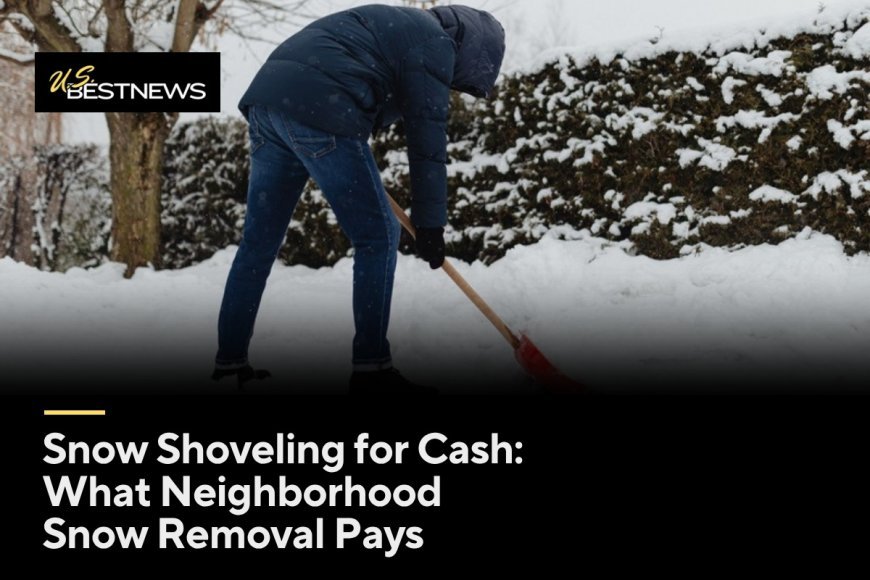
How much can you actually make shoveling snow in your own neighborhood? The honest answer depends less on how fast you can clear one driveway than on whether you can build a small route, price the work before you are standing in a storm, and still have shoulders left for the next snowfall.
Snow work is one of the few winter side jobs with instant local demand and almost no platform in the middle. That makes it appealing. It also means you set the price, handle the complaints, buy the salt, and decide when conditions are too dangerous to be outside with a shovel.
What neighbors usually pay for, and what they do not
Most household customers are buying a clear path by a time that matters: a driveway they can leave for work, a walkway a mail carrier can use, and steps that are not a sheet of ice. Price may be quoted per visit, per storm, or as a season arrangement. A per-visit price is simple after light snow and painful after a wet, heavy storm unless you have agreed how depth or drifting changes it.
Local pay varies too much for a single national figure to mean much. A short driveway in a dense neighborhood where you can do several homes on one street is different work from a long rural drive with nowhere to push snow. Ask what local lawn or snow services charge, look at neighborhood posts, and test your price on the first few inquiries. If everyone says yes instantly, you may be too low.
Be clear about what is excluded. Roof snow, ice dams, cars buried by a plow ridge, and hauling snow away are not ordinary shoveling. The dense wall a street plow leaves at the end of a driveway can take longer than the driveway itself. Name it in your offer, such as including a normal plow ridge or pricing it separately when it is unusually heavy.
Price the route, not just the driveway
A route beats random jobs. Five homes on two streets can earn more per hour than eight scattered drives because you walk or drive less between them and learn each property. Start with neighbors you already know, older residents who should not be shoveling, and homes with long walks or corner lots where the sidewalk burden is obvious. A short note before the season beats knocking during a storm.
Time yourself honestly during the first snow. Include putting on gear, clearing the car if you drive, travel, breaks, and salting. If a job pays a set amount but takes twice as long in wet snow, your hourly result may fall below other winter work. Track two or three storms before deciding whether to raise prices, add a snow blower, or drop the farthest house.
Season packages can smooth income but carry risk. A winter with repeated storms can turn a flat package into many unpaid extra visits, while a mild winter can make customers feel they overpaid. If you offer one, define how many visits are included, what counts as a visit, and how unusually large storms are handled. Put the agreement in a text or note both sides keep.
Costs, tools, and the body is equipment too
A sturdy shovel, an ice scraper, traction footwear, gloves you can grip with, and salt or sand for steps are the basic kit. A snow blower can speed up a route but adds purchase, fuel, maintenance, transport, and storage costs. Do not buy a machine on the promise of one storm. Borrow, rent, or complete a few manual jobs first unless you already have enough committed homes to justify it.
Your body is the real limit. Snow shoveling is hard cardiovascular work in cold air, and wet snow is deceptively heavy. The American Heart Association has long warned that snow shoveling can strain the heart, especially for people who are usually inactive or have heart disease or risk factors. Push rather than lift where you can, take small loads, rest, and stop for chest pain, unusual breathlessness, or dizziness.
Talk to a doctor before taking on a route if you have heart or blood-pressure concerns. Younger is not the same as invulnerable, and a side job is not worth an emergency. Dress in layers you can vent, protect your ears and fingers, and keep water in the car. Cold hides thirst until you are already depleted and clumsy on ice.
Customers, payment, and staying out of trouble
Agree the trigger before snow falls. Some customers want service after a set depth, some after every storm, and some only when they call. Agree when the job should be done by, where snow may be piled, and whether you should salt. Do not pile snow against a house, on a neighbor's property, or where meltwater will refreeze across a public sidewalk if local rules prohibit it.
Take payment in a way that leaves a record, even for cash work. A simple text confirming the job and amount protects both sides. Income from shoveling is taxable even when customers pay cash, so keep a list of dates, addresses, and amounts. If the work grows into a regular business with helpers, ask your town or state about licensing, sales-tax, insurance, and employment rules before it grows by accident.
Liability deserves one sober thought. If you salt poorly, damage a door with a blower, or a customer says a fall happened after your visit, a friendly arrangement can become a claim. Photograph finished work if customers expect proof, carry out only the services you agreed, and consider insurance once you have regular paid routes. Ask an insurer what a small seasonal operation needs rather than assuming a home policy covers it.
Finding regulars without becoming a nuisance
A short printed note through a mailbox or a post in a neighborhood group can offer a named service, a clear area, a phone number, and the last date you are taking regulars before winter. Avoid promising same-hour service you cannot deliver. People remember a realistic offer kept more kindly than a heroic offer missed while they were trying to leave for a hospital appointment.
Offer existing customers a simple referral thank-you only if you can afford it, such as priority booking rather than a discount that cuts the rate below your costs. Your best advertisement is a clear path at the promised time during a storm neighbors are all watching from their windows. In this trade, the product and the ad are the same pavement.
Keep a waiting list rather than overbooking. If a regular cancels, a nearby waiting-list home can fill the slot without extra travel. Tell waiting-list customers honestly that they are not guaranteed a time until you confirm. Scarcity handled politely builds a route. Scarcity handled vaguely builds a reputation for disappearing.
Turn one storm into a small winter system
After each storm, send one short message to regulars confirming you serviced the home and asking them to flag ice or missed spots quickly. Keep notes on which driveways drift, which steps refreeze, and which customers need early clearance. Those notes make the second storm faster and are the beginning of a real route, not just a series of favors.
If demand is more than you can handle, raise prices or narrow the area before you start missing promised times. In snow work, reliability is the product. An older customer who cannot leave home cares less about a small saving than about knowing the walk will be clear before a medical ride arrives. Protect your reputation by refusing work you cannot reach.
Snow shoveling can pay because neighborhoods run on trust and timing. Price by the route, count your hours and tools, look after your heart, and write the agreement down while the sky is clear. Then, when the first real storm arrives, you are not improvising a business in the dark. You are running one.
What's Your Reaction?
 Like
0
 Dislike
0
 Love
0
 Funny
0
 Angry
0
 Sad
0
 Wow
0