








Buying Cheap vs. Buying Once: When Paying More Can Save Money
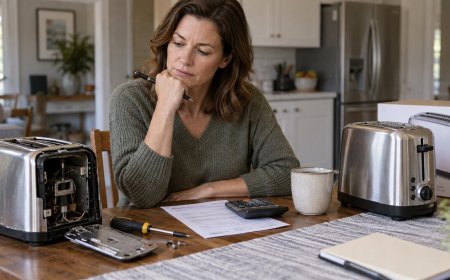
The bargain bin version looks identical on the shelf. Half the price. Same color. Good enough. Six months later you are buying it again, and the "savings" have quietly become a subscription to frustration. Buying cheap is not always wrong. Buying once is not always wise. The money win is knowing which decision you are actually making.
This is a household cost test for everyday gear, not a lecture on luxury brands. You will use cost per use, replace cycles, and a few kitchen-table examples so the next cart choice gets clearer. Pay more when the math says so. Buy cheap when the item is disposable by nature.
Reframe: cheap is a price; once is a strategy
Cheap answers the tag today. Buy-once answers the next two years of your time, returns, and replacement runs. Families lose money when they treat every purchase like a one-day price contest. They also overspend when they romanticize premium labels for things that get lost, outgrown, or used twice a year.
The useful question is simple: Will I replace this soon, hate using it, or keep it long enough that the higher price divides into a lower cost per use? If you cannot answer, pause before checkout. A short pause beats a long regret cycle.
Run the cost-per-use napkin test
Divide price by realistic uses, not hopeful uses. A $40 pan used 200 times costs $0.20 per meal prep. A $15 pan that warps after 40 uses costs $0.38 and also costs the evening you scrape stuck food while hungry. Time is part of the receipt even when the store does not print it.
Be honest about frequency. A premium suitcase for two trips a year may lose to a midrange bag. A daily backpack for work may repay quality quickly. Frequency is the lever. Without it, "buy once" is just a slogan on a tote bag.
Add a second line for hassle. If replacing the item means another evening drive, a return line, or a week without the tool, count that as cost. Cheap that wastes Saturdays is not cheap.
When cheap wins on purpose
Buy cheap for items with short lives by design: kids' trend toys, one-season fashion experiments, party decorations, trial hobbies, and anything you fully expect to lose, stain, or outgrow. Also buy cheap when quality differences are tiny for your use case, like basic extension cords for a single weekend project you will return or store rarely.
Cheap also wins when cash is tight this month and the item is truly temporary. Just label it temporary in your head. The trap is calling a stopgap "good enough forever" and then being surprised when it fails mid-project. Write "temp" on the receipt photo if you need the reminder.
- Short life or high loss risk (kids items, event gear)
- Trial phase for a new hobby
- Nearly identical performance at a lower price
- One-time or rare use where midrange already feels like overkill
When paying more usually saves money
Pay more for things that touch safety, daily friction, or expensive consequences when they fail. Think work shoes you walk in daily, a reliable kitchen knife you use every dinner, weather seals, phone chargers that will not fry a device, and tools that would be dangerous if they slip. Failure cost matters as much as sticker price.
Also pay more when replacement is annoying: mattresses, major cookware, winter coats you need on the coldest day, and anything that strands you if it dies midweek. Convenience is a budget line even when it does not show on the receipt. If a failure would force a same-day emergency buy at full price, quality often wins.
Household examples that show the fork in the road
Rain boots: a $25 pair that leaks in month three means wet socks and another purchase before the season ends. A $70 pair that lasts three falls can win on cost per rainy day. Sheet sets: ultra-cheap sets that pill after a few washes push you back to the aisle. One solid set that survives weekly laundry often costs less over two years.
Phone cables are a classic. The bargain cable that dies and scratches your schedule is not cheaper than a known durable cable. Light bulbs in hard-to-reach fixtures lean buy-once too, because ladder time is real. Trash bags, paper towels, and picnic plates can stay firmly in the cheap-or-store-brand lane.
Kitchen towels, basic spatulas you rarely use, and guest-room extras often stay in the cheap lane. Daily cookware, a primary vacuum, and winter outerwear usually do not. Match the lane to the job, not to a personality of "I always buy cheap" or "I only buy premium."
Watch the fake "buy once" traps
Premium packaging is not a durability guarantee. Influencer aesthetics are not a warranty. A higher price can mean brand markup, not better materials. Read return windows, warranty length, and a few recent owner complaints about the exact failure mode you care about (zippers, soles, nonstick coating, seams).
Another trap is upgrading everything after one good buy-once win. You do not need heirloom status for a vegetable peeler you use twice a month. Keep the test local to each purchase. Consistency of method beats consistency of brand snobbery.
Gift-driven upgrades can also distort the test. A fancy gadget received once does not mean every related tool must match that tier. Borrow the lesson (what failed, what lasted) without copying the price tag across the whole drawer.
Replace cycles beat gut feelings
Guess how long the cheap version lasted last time. If you bought the same $18 item three times in two years, you already spent $54 plus shopping time. A $45 version that lasts those same two years is not an indulgence. It is catching up with your own history.
Keep a boring note on your phone: item, price, date bought, why it failed. After a few seasons you will stop arguing with yourself in the aisle. Your past receipts become the advisor. Patterns beat product reviews written by people with different lives than yours.
Store brand vs name brand is a separate test
Buy-cheap versus buy-once is not the same as store brand versus name brand. Many store brands are the durable choice for consumables and even some durables. Many name brands are fashion markup. Ask whether the materials and warranty differ, not whether the logo feels reassuring under fluorescent lights.
For food staples and cleaning supplies, store brand often wins. For footwear soles, suitcase wheels, and anything with moving parts, inspect construction. The logo is marketing. The hinge, stitch, and warranty are the money.
A simple three-question checkout filter
Before you buy household gear over a price that would sting to repeat, ask three questions. How often will I use this in the next year? What happens if it fails next month? Have I already replaced a cheap version of this recently? Two "often / painful / yes" answers nudge you toward quality. Two "rarely / no big deal / no" answers keep you in the bargain lane.
- Use frequency in the next 12 months
- Consequence if it fails early
- Personal replace history for the same item
- Cash available without borrowing for the upgrade
Budget the upgrade without blowing the month
Buy-once fails when it becomes a spontaneous splurge that crowds out rent money. If the better version matters, wait one payday, use a sinking fund, or buy during a known sale week. Paying more responsibly still beats paying more on a credit card you cannot clear.
For couples or roommates, agree on categories in advance: daily-use tools and safety gear lean quality; novelty and decor lean cheap. Shared rules reduce aisle debates and duplicate purchases. Put the category list in a notes app so the conversation happens once, not every Saturday at the store.
What to do on your next shopping trip
Pick one item you have replaced twice already. Compare a midrange option using cost per use and your real replace history. Buy that upgrade once, then leave the rest of the cart alone. One corrected pattern beats a whole cart of theoretical optimization.
Buying cheap and buying once are both smart when they match the job. Use cost per use, failure consequences, and your own replace cycle. That is how paying more sometimes saves money, and how staying cheap sometimes is the wiser household move.
What's Your Reaction?
 Like
0
Like
0
 Dislike
0
Dislike
0
 Love
0
Love
0
 Funny
0
Funny
0
 Angry
0
Angry
0
 Sad
0
Sad
0
 Wow
0
Wow
0