


























Paying a Nanny or Caregiver: When Household Employment Taxes Apply
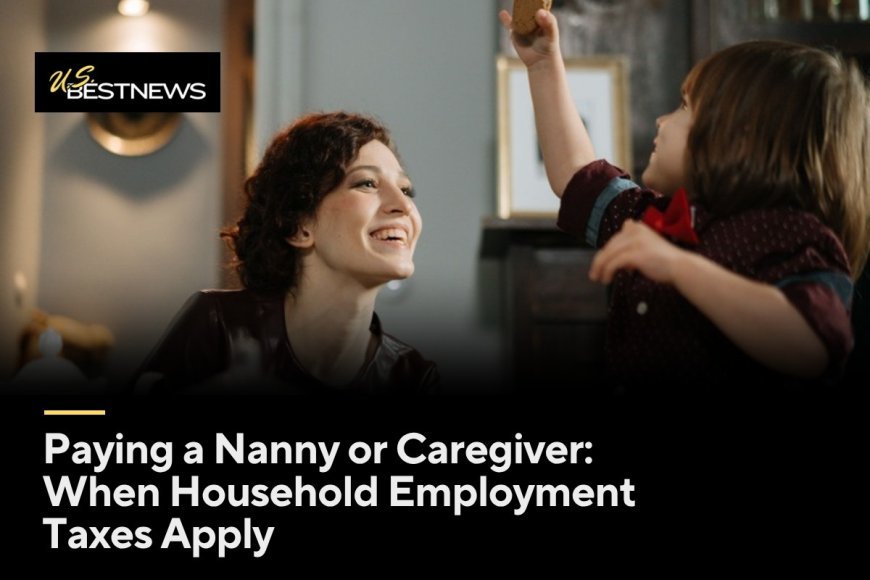
When does paying the person who cares for your child or parent stop being a household arrangement and become being an employer? For many families the answer arrives late, after months of cash or app payments, when a caregiver asks for a tax form, applies for a benefit, or is injured and everyone discovers the paperwork was never built.
The so-called nanny tax is not a special penalty. It is the ordinary system of Social Security, Medicare, unemployment, and wage reporting applied to work in a home. Whether it applies depends on how much you pay and who controls the work, not on whether the caregiver feels like family.
The employee question comes before the tax question
A nanny or caregiver who works in your home on a schedule you set, using your household's routines and equipment, and under your direction is commonly your household employee, even if you found them through a friend and pay weekly. A worker who runs an independent business, serves several clients on terms they control, and provides their own service structure may be different. The label in a message does not decide the relationship; the working facts do.
Care provided through an agency is different again. If an agency employs and pays the caregiver, the agency generally carries the employer duties for that worker, though families should confirm who issues pay and tax forms and who is responsible if the worker is hurt. If you hire, schedule, direct, and pay the person yourself, assume the household-employer question needs a proper answer before the first payday.
Regular in-home care for an older parent follows the same logic as childcare. Calling the worker a companion, sitter, or caregiver does not remove employment taxes if the person is your employee. Care in the caregiver's own home, occasional babysitting by a teenager, and some family employment have special rules. Those exceptions are specific, so ask the IRS guidance or a payroll professional rather than stretching an exception to fit a full-time adult nanny.
The wage threshold and what is owed
The Internal Revenue Service sets a household employment wage threshold for Social Security and Medicare taxes, and it is adjusted over time. If you pay a household employee cash wages at or above the threshold for the year, those taxes and wage reporting generally come into play. Because the threshold for the current year is the number that matters, confirm it in IRS Publication 926 or Topic No. 756 before relying on an old figure remembered from another family's experience.
Federal unemployment tax has its own threshold and rules, and your state may have unemployment insurance, workers' compensation, disability, paid-leave, or registration duties with different triggers. Do not assume that staying under one threshold removes every obligation. A state labor or tax agency can tell you how household employers register. This patchwork is why families often use a household payroll service once care becomes regular.
If tax applies, the employer generally must withhold or pay the employee share arrangement correctly, pay the employer share of Social Security and Medicare where required, report wages, and give the worker a Form W-2. Federal income tax withholding for a household employee is generally by agreement rather than automatically required. The family may handle household employment taxes through Schedule H with its own return and estimated payments so a large amount is not due at filing. Those mechanics deserve care, not improvisation.
Why paying cash or by app does not settle it
Cash wages are still wages. An app transfer, a weekly envelope, or calling the amount a stipend does not decide whether tax is owed. If the worker is an employee and the threshold is met, the duties follow the payment. The record you create with an app can help prove amounts, but it does not replace registering, withholding where required, or issuing wage forms.
Paying off the books can hurt the caregiver as much as the family. The worker may lose Social Security and Medicare credits, unemployment protection, verifiable income for housing or credit, and a clear record if injured. It can leave the family facing back taxes, penalties, and a painful conversation with someone they trust inside their home. A fair wage discussion should include the cost of doing the employment properly rather than discovering it as a debt.
If you have already paid without treating the caregiver as an employee, do not compound the problem by inventing records. Gather what you paid, when, and for what work, then ask a tax professional or household payroll service how to correct prior periods. Correction can be uncomfortable. It is usually less uncomfortable than waiting until the caregiver files, applies for unemployment, or needs wage proof and the story emerges without your preparation.
Agency, family hire, or payroll service: compare honestly
An agency may charge more per hour while recruiting, screening, employing, insuring, and replacing the caregiver. Ask exactly which of those it does, who supervises the worker, what happens if the regular caregiver is ill, and whether the agency or your family is the employer for tax forms. Get it in the service agreement. Families sometimes pay agency prices while accidentally retaining employer duties they thought they had transferred.
A direct hire can give the family more choice and continuity, especially for a parent who needs a familiar person. The family then carries recruitment, background checks where lawful, payroll, tax registration, insurance questions, and backup care. A household payroll company can handle calculations, filings, and pay for a fee while the family remains the employer. Price that fee as part of the wage offer, not as an afterthought.
Workers' compensation and liability deserve a direct question to your insurer or state. A caregiver who falls on your steps or is hurt lifting a parent may not be covered by a homeowner policy in the way a family assumes. Ask before care begins. The answer may affect whether an agency's insurance is worth its markup, particularly for transfers, bathing, driving, or overnight work.
A first-week setup list for household employers
Before the first shift, confirm the worker's information and forms through the proper hiring process, register for any federal or state employer numbers you need, and decide how time will be recorded. The Internal Revenue Service's household employer guidance and Publication 926 walk through the federal side, while your state tax and labor agencies cover registration, unemployment, and any wage payment rules that apply where you live.
Open a simple payroll record, even if a service will calculate the money. Keep hours, gross pay, withholdings, employer taxes, pay date, and the forms filed, and give the caregiver a pay statement they can use. Decide how paid leave and schedule changes appear in that record. A caregiver should not have to reconstruct their year from bank transfers and text messages.
Ask about insurance before care involves lifting, bathing, driving, or medication support. Your homeowner or umbrella insurer, the state workers' compensation system, and any payroll provider can each explain a piece; none should be assumed to cover the whole risk. Write the answer in the employment file. Careful families plan for the injury they hope never happens.
Have the money conversation before the first shift
Talk about gross pay, expected hours, overtime where it applies, paid time off, holidays, mileage or transport, and taxes before care starts. Put the schedule, duties, pay date, and how schedule changes are approved in a short written agreement. A caregiver who understands whether the quoted rate is before or after withholding will not feel that the first legal paycheck is a pay cut.
Keep time and pay records contemporaneously. Note dates, hours, gross pay, amounts withheld, and employer taxes paid. Store the employment forms the IRS and state require and confirm the worker's eligibility paperwork through the proper process. Do not keep copies of sensitive documents casually on a kitchen counter; employment paperwork deserves the same privacy you would expect from your own employer.
Paying a nanny or caregiver properly is part of paying fairly. Decide who the employer is, confirm the current IRS and state thresholds, register before the work becomes regular, and use payroll help if the forms crowd out the care. The relationship runs on trust inside a home. Clear taxes and written pay are not bureaucracy on top of that trust. They are how you protect it.
What's Your Reaction?
 Like
0
 Dislike
0
 Love
0
 Funny
0
 Angry
0
 Sad
0
 Wow
0