
























The Year-End Paperwork Folder That Can Make Tax Season Less Stressful
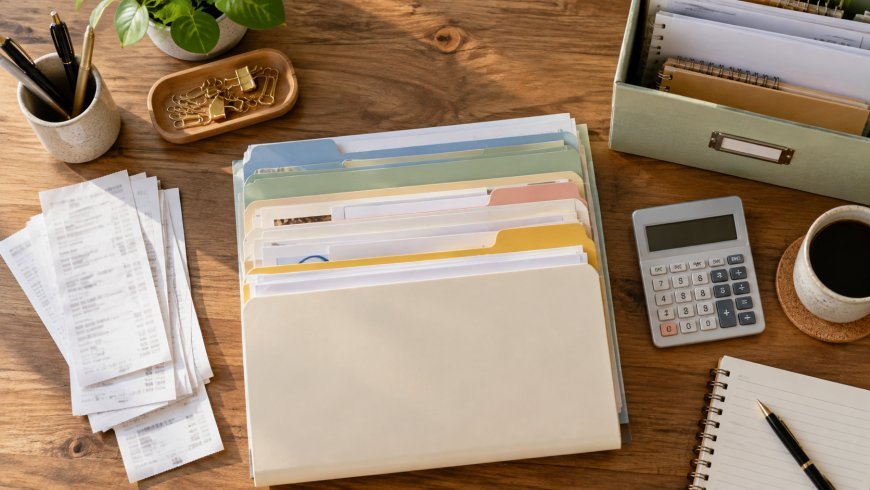
Tax-season stress often begins with a receipt that cannot be found, an address that was never updated, or a form buried in an old email account. A simple year-end folder gives every potentially relevant document one place to land while there is still time to fill gaps.
The folder is an organization tool, not a substitute for tax advice. What you must keep depends on your situation and current rules, but a clear system makes it easier to prepare your return or work efficiently with a qualified professional.
Choose one home for paper and one for digital records
Use a marked physical folder or small file box for mailed forms and receipts. Create a matching secure digital folder for downloads, scans, and confirmation emails. Avoid scattering records across a phone, personal email, work computer, and several cloud accounts.
Name files consistently by year, category, and issuer. Back up important records and protect accounts with strong authentication. Tax paperwork contains sensitive information, so security matters as much as convenience.
Create an expected-document checklist
List every employer, bank, brokerage, lender, marketplace, payment platform, or benefits administrator that may send a form. Use last year's return as a memory aid and add what changed. Note whether each item normally arrives by mail or online, then check it off only after saving the final version.
Collect income information
Set aside wage statements, contractor or gig-income records, interest and dividend statements, retirement distributions, unemployment records, and other income documents that apply. Do not assume that not receiving a form means income can be ignored. Reconcile your own deposits and invoices when you have side work.
Save support for possible deductions or credits
Depending on your circumstances, relevant records may involve education, childcare, charitable giving, eligible business expenses, energy improvements, health coverage, or other items. Keep receipts, invoices, payment confirmations, and supporting documents together. A card statement may show that money moved, but not exactly what was purchased.
Organize home and property records
Retain closing documents, property-tax bills, mortgage statements, and records of significant improvements. Ordinary repairs and improvements may be treated differently. Keep detailed invoices and proof of payment rather than relying on photos or memory.
Separate side-hustle activity
If you earn money independently, create subfolders for income, platform statements, fees, supplies, mileage logs where applicable, insurance, and business records. Do not wait until filing time to reconstruct months of transactions. Identify personal transfers so they are not confused with customer income.
Keep donation records together
Store acknowledgments and receipts for qualifying gifts, including details that identify the organization, date, amount, and nature of the contribution. For donated property, record what was given and retain appropriate documentation. Avoid estimating months later.
Update personal information
Confirm that employers and financial institutions have your current legal name, mailing address, and identification information. If you moved, changed banks, married, divorced, welcomed a child, or had another major change, note it in the folder so it is discussed during preparation.
Review benefit-account records
Save applicable documents from health savings, flexible spending, retirement, and dependent-care accounts. Keep receipts required by a plan even if they are not entered directly on the return. Account administrators and tax rules can have different documentation expectations.
Do a December gap check
Before the year closes, compare the folder with the checklist. Confirm that logs are current, digital receipts are readable, and missing invoices have been requested. You will still wait for official year-end forms, but the supporting work can be largely complete.
Check again before filing
Forms arrive at different times and corrected versions may follow. Compare each form with your records, watch for notices that a document was updated, and avoid filing simply because the first few arrived. If something seems wrong, contact the issuer before guessing.
Protect sensitive records
Do not leave Social Security numbers, account credentials, or identification copies where others can access them. Lock paper records away, use secure digital storage, and shred unneeded duplicates rather than placing them intact in household trash.
The bottom line
A year-end paperwork folder reduces the need to search and improvise under a deadline. Give every document a home, maintain a checklist, separate business activity, protect sensitive information, and review twice. When a question requires interpretation, bring the organized records to a qualified professional.
What's Your Reaction?
 Like
0
Like
0
 Dislike
0
Dislike
0
 Love
0
Love
0
 Funny
0
Funny
0
 Angry
0
Angry
0
 Sad
0
Sad
0
 Wow
0
Wow
0