



























Is the Extended Warranty Worth It on Holiday Electronics?
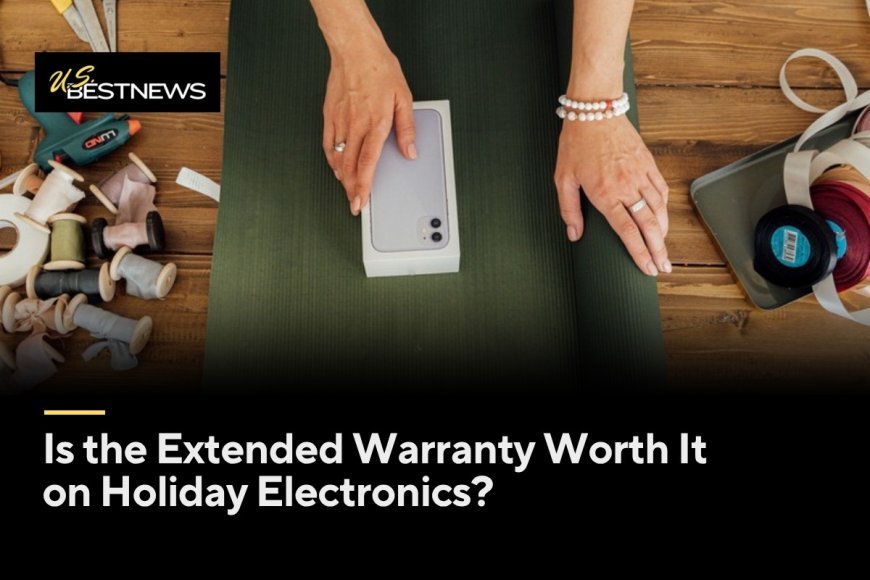
At the register, the question comes fast: do you want to add protection for two years for a fraction of the price? You just spent a good chunk on a laptop, a TV, or a gaming console, and the idea of a costly repair feels worse than the add-on price. That moment is exactly why extended warranties are such a profitable product for stores.
Sometimes they are worth it. Often they are not, because you may already have overlapping coverage from the manufacturer or your credit card. Before the holiday checkout question arrives, it helps to know what you already have and what a plan really promises.
What you already get for free
Most new electronics come with a manufacturer's warranty that covers defects for a set period, often one year. During that time, a separate store plan may duplicate coverage you already have. Look up the manufacturer warranty for the specific product before you buy, so you know when free coverage ends.
Many credit cards offer an extended warranty benefit that adds time to an eligible manufacturer's warranty when you pay with that card. The length, eligible items, and claim rules vary by card. Check your card's benefits guide or call the number on the back. If your card adds a year, a store plan may be worth even less.
The Federal Trade Commission notes that extended warranties, more accurately called service contracts, are optional and sold separately. You do not have to buy one to get the manufacturer's warranty, and a salesperson should not suggest otherwise.
What a service contract usually covers
Read the contract, not the brochure. Find out what counts as a covered failure, whether accidental damage like drops and spills is included, and whether there is a deductible per claim. Many plans exclude accidental damage unless you pay for a higher tier, and that is often the damage people actually worry about with phones and laptops.
Find out who backs the contract. Sometimes it is the store, sometimes the manufacturer, and often a third-party company. Ask how claims are filed, whether you must ship the item or bring it in, how long repairs typically take, and whether you get a loaner or replacement.
Ask what happens if the item cannot be repaired. Some plans replace it with a comparable model, some issue a gift card, and some pay a depreciated value. Ask whether the plan can be canceled for a prorated refund. Get answers in writing, or at least know where they are written in the contract.
When it can make sense
A service contract can be reasonable for an item that is expensive, likely to be damaged, and costly to repair, especially if the plan covers accidental damage and you are prone to drops and spills. Laptops carried daily by students, or devices used by young kids, can fit this pattern.
It may also make sense if you would struggle to replace the item from savings and the plan price is modest relative to the repair risk. Think of it as insurance. Insurance is worth buying when a loss would be hard to absorb, not when a loss would be annoying but affordable.
Consider the item's reliability. Many electronics that work through their first year continue to work for years. If a failure is most likely in the first months, the manufacturer warranty already covers it. Paying extra for coverage in years two and three only pays off if failures in that window are common enough.
When it is usually not worth it
For lower-priced items, a plan can cost a large share of the purchase price. You might come out ahead by setting that money aside in your own repair fund. If nothing breaks, you keep it. If something does, you have cash to put toward a repair or replacement, often a newer model at a lower price by then.
Plans for items that become outdated quickly can also disappoint. By the time a covered failure happens, the item may be worth far less, and a replacement under the plan may not feel like much of a win. Technology prices tend to fall, so a later replacement may cost less than you expect.
If you already have homeowner's or renter's insurance, check whether it covers theft or damage to electronics in some situations, usually subject to a deductible. It is not a replacement for a warranty, but it may reduce how much protection you feel you need to buy at the register.
How to decide quickly at checkout
Before you go shopping, decide your rule. For example, you might skip plans on anything under a certain price or on items your credit card already covers. Having a rule ready makes it easier to say no without second-guessing yourself while a line forms behind you.
If you are tempted, ask whether you can buy the plan later. Some retailers allow you to add a plan within a set window after purchase. That gives you time to read the contract at home and compare it with your card's coverage before committing.
Use the same card for purchases you might want to protect, and keep the receipt and the manufacturer warranty information together. Many claims fail because the buyer cannot find proof of purchase. A photo of the receipt saved in a folder on your phone can solve that.
Watch for overlap with protection you already pay for
Some phone carriers and device makers sell monthly protection plans that cover loss, theft, and accidental damage. If you already pay for one, a store plan on the same phone duplicates it. Check bank statements and phone bills for protection charges you may have forgotten about.
Some homeowners already pay for home warranties that cover certain appliances. These do not usually cover portable electronics, but they may cover a television that is part of a built-in system or certain kitchen gadgets. Read what you have before adding more coverage.
Over a few years, small monthly protection fees can add up to more than the cost of a repair. A quick review once a year keeps you from paying for coverage twice.
Keep a short list of what is covered, by whom, and until when. A single note on your phone can save a frustrating search when a screen cracks or a laptop stops charging.
Make whatever coverage you have actually work
Register the product with the manufacturer if it is easy to do, and save the model and serial number. Write down when the manufacturer warranty ends and when any card benefit ends. A calendar reminder a month before coverage expires gives you time to check for problems while repairs are still free.
If something goes wrong, start with the manufacturer during the warranty period. If you bought a service contract, follow its claim steps closely and keep records of every call. If a claim is denied unfairly, ask for the reason in writing. You can also report problems to your state attorney general or the FTC.
Put simply, an extended warranty is a type of insurance, priced to make money for the seller. Check the manufacturer warranty and your credit card benefits first, read what the plan really covers, and buy one only when a failure would truly hurt your budget. Most of the time, a little self-insurance does the job.
What's Your Reaction?
 Like
0
 Dislike
0
 Love
0
 Funny
0
 Angry
0
 Sad
0
 Wow
0