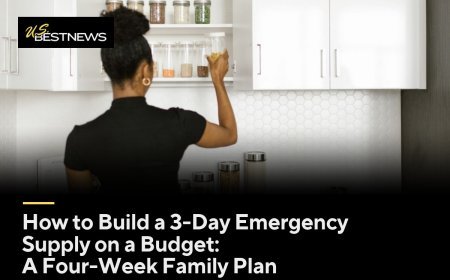


























How to Build a 3-Day Emergency Supply on a Budget: A Four-Week Family Plan
A three-day emergency supply does not have to be bought in one trip or one paycheck. Government agencies in the US and abroad say the same thing: start with what you have and add the rest gradually. The challenge for most families is turning that general advice into a plan that fits a real budget and a real household.
This step-by-step plan builds a 3-day home supply over about four weeks, using guidance from Ready.gov and FEMA, the CDC and the American Red Cross. It is designed for a typical family, but you can scale it up or down for your household.
Week one: take stock and plan
Before buying anything, walk through your home with a notebook. Count your canned and boxed foods, bottled water, flashlights, batteries and first aid supplies. Many households find they already have a good share of a basic kit spread across the kitchen, garage and closets.
Next, calculate your water needs. Ready.gov and the CDC recommend at least one gallon per person per day. For three days, multiply the number of people by three. A family of four needs 12 gallons, plus extra for pets. Write this number down. It is your main shopping goal.
Pick one place to store your supplies, such as a closet shelf or a large plastic bin. Ready.gov suggests keeping a kit in easy-to-carry containers, and having everything in one place makes it easier to check and use.
Week two: water and a can opener
Make water your first purchase. Buy sealed, commercially bottled water, which the CDC calls the safest option, or fill clean, food-grade containers with tap water. If you fill your own, label them with the date and replace them every six months, as Ready.gov and the CDC recommend.
Spread purchases across a few shopping trips if a full supply is too heavy or costly at once. Store water in a cool, dark place away from chemicals such as gasoline or pesticides.
Add a manual can opener if you do not have one. It costs little and is easy to forget, but without one, a pantry full of canned food is far less useful during a power outage.
Week three: food your family will actually eat
Ready.gov recommends a several-day supply of non-perishable food. Make a list of three days of simple meals and snacks that need no cooking or refrigeration, such as canned beans, soups, tuna, fruit, peanut butter, crackers, cereal and granola bars.
Buy items your household normally eats. Food you dislike is more likely to sit until it expires. Store-brand canned goods often cost less than name brands, and buying a few extra items on each grocery trip spreads the cost.
Use a simple rotation habit: put new cans at the back of the shelf and use older ones first. Check dates every six months. This keeps your supply fresh and avoids waste.
Week four: light, information and first aid
Add flashlights and extra batteries for each room people will use. Ready.gov recommends a battery-powered or hand-crank radio and a NOAA Weather Radio with tone alert. A hand-crank radio avoids the need for extra batteries.
Check your first aid kit and restock missing items. Ready.gov suggests including prescription medications and over-the-counter basics. The Red Cross recommends a 7-day supply of medications, so talk to your pharmacist about refill timing if needed.
Add a charged phone battery pack and keep chargers with your kit. Recharge the battery every few months so it is ready when needed.
Fill the gaps over time
Once the basics are covered, add items from the Ready.gov and Red Cross lists as your budget allows: moist towelettes, garbage bags, hand sanitizer, toilet paper, a whistle, dust masks, duct tape, local maps and a wrench or pliers for turning off utilities.
Keep a small amount of cash at home in small bills, since card readers and ATMs may not work during outages. Make copies of important documents, such as identification and insurance policies, and store them in a waterproof container or a secure digital location.
Write down emergency contact numbers on paper. Decide on an out-of-area contact and a meeting place if your family is separated.
Plans for different households
For a single adult or couple, the plan can move faster. Water and food needs are smaller, and many of the items above may already be on hand. Focus on water, a radio, flashlights and medications first.
For families with young children, add formula, bottles, diapers and wipes, as Ready.gov recommends, along with comfort items like books and games. Children can help pick snacks and check the kit, which makes the process less stressful.
For older adults or people with disabilities, prioritize medications, medical supplies and backup power for any equipment. If you have pets, add food, water, a leash, a carrier and copies of vaccination records, as the Red Cross suggests.
Mistakes to avoid
Do not store water in old milk or juice jugs. Ready.gov warns that these containers cannot be fully cleaned and can allow bacteria to grow. Use bottled water, food-grade containers or cleaned soda bottles instead.
Do not let supplies expire unnoticed. Set a reminder to check your kit every six months, perhaps when the clocks change in spring and fall. Replace expired food and water and test batteries.
Do not buy specialty survival products before covering the basics. Freeze-dried meals and gadget-filled kits can be expensive, and many families get more value from everyday groceries they already eat. Avoid panic buying when headlines spike. Shortages affect neighbors, and calm, gradual shopping gets you to the same goal.
Shopping smart without overspending
Use the list you made in week one every time you shop, so you buy only what fills a gap. Sales on canned goods and bottled water are common, and stocking up a little during a sale is a sensible way to stretch your budget.
Check what you can borrow or share. A neighbor may have a spare radio or extra containers, and some community groups and local emergency management offices hand out preparedness materials at events.
Skip duplicates. One good flashlight per person and one radio for the household are usually enough. Spending on more gear rarely adds as much protection as making sure the water and food you already have are fresh and easy to find.
Finally, keep receipts and note what you spent. Seeing the total spread over a month often shows that a basic 3-day supply costs less than people fear, especially when most of the food is ordinary groceries you would eat anyway.
Keep it going
A 3-day supply is not a one-time project. Ready.gov recommends rethinking your needs every year and updating your kit as your family changes. A new baby, a new pet or a new medication should prompt a quick review.
Use your supply as part of normal life. Rotate food into weeknight meals, replace water on schedule and restock as you go. That way, your emergency kit stays fresh and costs stay low.
The goal is simple: enough water, food, light and basic supplies to get your family through a few days without help. Built over a month, on your own budget, it is one of the most practical steps a household can take.
What's Your Reaction?
 Like
0
 Dislike
0
 Love
0
 Funny
0
 Angry
0
 Sad
0
 Wow
0