

















Social Security Scam Calls: The Scripts Fraudsters Use Around COLA Season
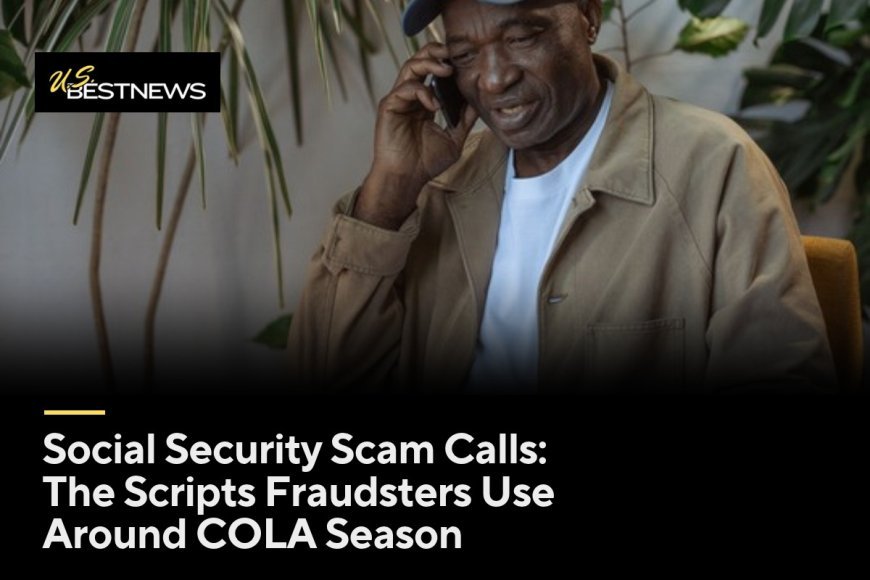
The call sounds official. A voice says your Social Security cost-of-living adjustment is ready, but first you need to confirm your number, pay a small processing fee or update your direct deposit. The caller ID even shows a government number. Every part of it is a scam.
The Social Security Administration announced a 3.6% cost-of-living adjustment for 2027 on October 14, 2026, and fraudsters move quickly whenever benefits are in the news. Here are the scripts they use and how to protect yourself.
The COLA is automatic
The most important fact to know is simple: you do not need to do anything to get the COLA. According to SSA, the increase will begin with benefits payable to about 72 million Social Security beneficiaries in January 2027. Increased payments to people receiving Supplemental Security Income begin on December 31, 2026.
SSA's Office of the Inspector General warned in October 2026 that the COLA is applied automatically. No one needs to pay a fee, verify information or take action to receive it.
If someone says you must do something to receive your COLA, they are lying. Hang up.
Script one: activate your increase
In this script, the caller says your COLA must be activated or confirmed. They ask for your Social Security number, date of birth or bank information.
Some callers claim the increase will be lost if you do not act today. Others say there is a problem with your record that must be fixed first.
SSA does not call to activate increases. Your COLA notice will be available in your my Social Security account and arrive by mail. SSA says notices will be available online in late November.
Script two: pay a fee
Some scammers say a processing fee, tax or charge must be paid before you receive your increase. They may ask for payment by gift card, wire transfer, cryptocurrency or cash.
SSA says it will never ask you to pay with gift cards, prepaid debit cards, wire transfers, cryptocurrency or cash by mail. Any demand for these payment methods is a scam.
Government agencies do not require fees to give you benefits you are already entitled to.
Script three: your number is suspended
A common Social Security scam claims your Social Security number has been suspended because of suspicious activity or a crime. The caller may threaten arrest or legal action unless you act right away.
SSA says Social Security numbers are not suspended, and it will not threaten you with arrest or legal action. Threats are a sign of a scam.
Scammers may transfer you to a supposed agent or officer, or ask you to stay on the line and not tell anyone. Secrecy is a red flag.
Script four: change your direct deposit
Some scammers try to redirect your benefits. They might say you need to update your bank details for the COLA, then use your information to change your direct deposit to their account.
Never give bank account or personal information to someone who calls you unexpectedly. If you want to update your payment information, do it yourself through your my Social Security account or by contacting SSA directly.
Check your my Social Security account regularly. Turning on extra security features can make it harder for someone else to make changes.
How scammers make it look real
Scammers often spoof caller ID so it looks like the call is coming from SSA or another government agency. They may use real employee names, badge numbers or official-sounding titles.
SSA's scam page notes that fraudsters may send fake documents or photos of badges to look official. They may also send texts or emails with links to fake websites.
Do not trust caller ID or official-looking documents alone. If in doubt, hang up and call SSA directly at its official number, 1-800-772-1213.
How SSA actually contacts you
SSA generally contacts people by mail. It may call in some situations, such as if you have ongoing business with the agency, but it will not threaten you, demand immediate payment or ask for gift cards or wire transfers.
SSA says it may send texts or emails in some cases, but it will not send links asking for personal information in unexpected messages.
The best way to see your COLA amount is through your my Social Security account. SSA said people can opt in to receive notices online by November 18, 2026, to get their COLA notice online instead of by mail.
If you get a suspicious call
Hang up. You do not need to be polite to a scammer. Do not press any numbers or give any information.
Report the scam to SSA's Office of the Inspector General at oig.ssa.gov/report. You can also report it to the Federal Trade Commission at ReportFraud.ftc.gov.
Talk about it with family and friends. Scammers often target older adults, and sharing what you know can protect others. Our separate guides on gift card scams and pushy Medicare sales calls cover related tricks.
Texts and emails use the same scripts
The same COLA tricks show up by text and email. A message may say your new benefit amount is ready and include a link to view it, or claim you must verify your account to avoid a delay.
Do not click links in unexpected messages. Instead, go directly to ssa.gov by typing the address into your browser, and sign in to your my Social Security account. If the message really came from SSA, you will find the information there.
Be wary of messages with spelling errors, odd sender addresses or urgent language. Even polished messages can be fake.
Mail scams are possible too
Some fraudsters send letters that look like SSA notices. They may include official-looking seals and ask you to call a number or send payment.
Real SSA letters do not ask you to pay with gift cards or cryptocurrency. If you are unsure, call SSA at its official number rather than any number in the letter.
Help others recognize the scripts
Share these scripts with friends, neighbors and relatives who receive benefits. Many scam victims say the call sounded believable at the time. Knowing the common lines in advance makes them easier to recognize.
Some families agree on a simple rule: no one gives personal information over the phone to an unexpected caller, no matter who they say they are. A shared rule makes it easier to say no.
How to check a call that worries you
If a call shakes you, slow down and check it yourself. Hang up without giving any information. Then look up SSA's official number on ssa.gov rather than using a number the caller gave you, and call 1-800-772-1213.
Next, sign in to your my Social Security account and look at your payment information and messages. If nothing has changed and there is no notice, the call was almost certainly a scam. If something looks wrong, tell SSA right away.
Finally, report the call to the SSA Office of the Inspector General at oig.ssa.gov/report, even if you gave nothing away. Reports help investigators spot new scripts.
What to do this week
Sign in to your my Social Security account, or create one, so you can see your COLA notice online. SSA said people who opt in by November 18 can get their notice online. Then share the four scripts in this article with one friend or relative who receives benefits.
If you already gave information
If you gave your Social Security number, bank information or money to a scammer, act quickly. Contact your bank to report fraud and ask about stopping payments.
Check your my Social Security account for changes, and contact SSA if anything looks wrong. Consider placing a fraud alert or freezing your credit with the three credit bureaus.
Visit IdentityTheft.gov for a personalized recovery plan. The sooner you act, the more you can limit the damage.
What's Your Reaction?
 Like
0
 Dislike
0
 Love
0
 Funny
0
 Angry
0
 Sad
0
 Wow
0