



























Fall Car Maintenance Checklist: 10 Steps Before Winter Driving
The first cold morning is a poor time to discover a weak battery, worn wipers, or low tire pressure. A fall vehicle check gives you time to correct ordinary maintenance problems before freezing temperatures, heavy rain, snow, and shorter daylight make them more disruptive.
Your owner’s manual remains the best source for vehicle-specific service intervals. Use this checklist as a practical starting point and ask a qualified technician about anything you cannot inspect safely.
1. Check Tire Pressure When the Tires Are Cold
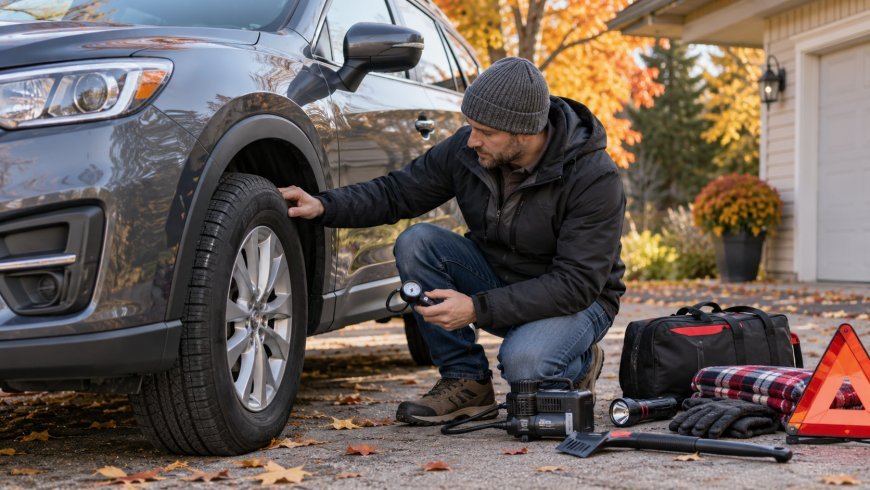
Tire pressure commonly changes as outdoor temperatures fall. Use the pressure listed on the driver-side door placard or in the owner’s manual—not the maximum printed on the tire sidewall. Check all tires, including the spare when equipped, before driving or after the vehicle has been parked long enough for the tires to cool.
2. Inspect Tread and Overall Tire Condition
Look for uneven wear, cracks, bulges, embedded objects, and other damage. Adequate tread helps a tire move water and maintain grip, but tread depth is only part of the decision. Tire age, weather, road conditions, and the manufacturer’s guidance also matter. Winter tires can offer better performance than all-season tires in deep snow and severe cold.
3. Test the Battery
Cold weather can expose a battery that was already losing capacity. Check for slow starting, dim lights, corrosion, or warning messages. A repair shop or parts retailer may be able to test the battery and charging system. Hybrid and electric vehicles also have manufacturer-specific battery and high-voltage safety requirements.
4. Examine Wipers and Washer Fluid
Replace blades that chatter, smear, split, or leave large unwiped areas. Fill the washer reservoir with fluid appropriate for expected winter temperatures. Never pour hot water on frozen glass, and do not use household chemicals that could damage vehicle surfaces.
5. Verify Lights and Visibility
Walk around the vehicle and check headlights, brake lights, turn signals, hazard lights, taillights, and license-plate lights. Clean exterior lenses and windows. Proper lighting matters more as days shorten and weather reduces visibility.
6. Review Fluids and Cooling Protection
Check engine oil, coolant, brake fluid, transmission fluid, and other serviceable fluids according to the owner’s manual. Coolant concentration and condition should provide appropriate freeze protection. Never open a hot cooling system, and keep automotive fluids away from children and pets.
7. Inspect Brakes and Heating Systems
Have unusual brake noise, vibration, pulling, or a soft pedal evaluated promptly. Test the heater and front and rear defrosters before you need them. Clear visibility and dependable braking are essential in wet, icy, or snowy conditions.
8. Check for Open Safety Recalls
Use the vehicle identification number to check for unrepaired safety recalls. Recall repairs are generally performed by the manufacturer’s dealer at no charge. Do the same for tires, child seats, and other regulated vehicle equipment when applicable.
9. Build a Practical Emergency Kit
- Ice scraper and snow brush
- Flashlight with spare batteries
- Warm blanket, gloves, and weather-appropriate clothing
- Jumper cables or an appropriate jump pack
- Phone charger and basic first-aid supplies
- Reflective warning devices
- Water and shelf-stable snacks
- Small shovel and traction material where severe winter weather is common
10. Adjust the Way You Drive
A maintained vehicle cannot cancel out unsafe speed or following distance. Slow down for conditions, leave more room to stop, avoid abrupt maneuvers, and never drive distracted or impaired. Clear snow and ice from the entire vehicle before leaving.
The Bottom Line
A one-hour fall inspection can reveal small problems before winter magnifies them. Check tires, battery, fluids, lights, visibility, recalls, and emergency supplies, then schedule professional service for anything uncertain or unsafe.
What's Your Reaction?
 Like
0
Like
0
 Dislike
0
Dislike
0
 Love
0
Love
0
 Funny
0
Funny
0
 Angry
0
Angry
0
 Sad
0
Sad
0
 Wow
0
Wow
0