


























Fall Leaf Cleanup: DIY, Mulching, or Hiring Out—What It Really Costs
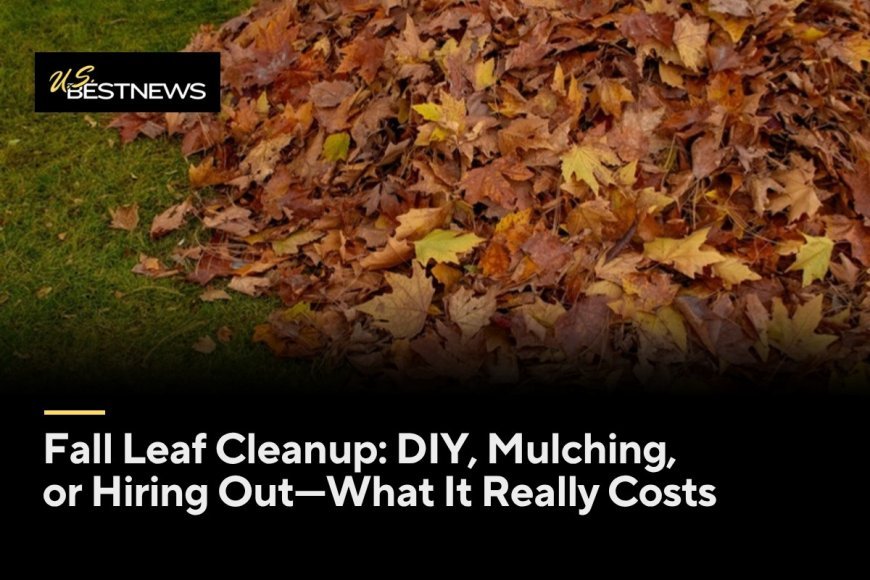
The first big leaf drop of the season has a way of sneaking up on people. One weekend the yard looks fine, and the next it is buried. That is when many homeowners start wondering whether to rake, mulch or just pay someone, and what each choice really costs.
It is mid-October, which is early enough to choose a plan before the heaviest weeks arrive. Below are four common approaches, priced side by side for three yard sizes. Treat every number as a rough estimate, since prices vary a lot by region, tree count and how wet the leaves are.
How to read the numbers
Professional prices below come from published 2026 cost guides, mainly Angi, HomeAdvisor and LawnStarter, which report what people typically pay. They are market estimates, not government statistics. The do-it-yourself numbers are my own rough guesses for basic supplies and are meant to give you a sense of scale.
Yards are described by lot size: a small lot of about one-sixth of an acre, a standard lot of about a quarter acre and a larger lot of about half an acre.
Option 1: Mulch the leaves into your lawn
Typical extra cost: about $0 to $40. If you already own a mower, this is usually the cheapest route. University extension services recommend mowing dry leaves with the deck set high, making a couple of passes to chop them into small pieces, and leaving the pieces on the lawn. Michigan State University Extension says many mowers can handle up to about 6 inches of leaves at a time, and smaller machines should take smaller amounts.
A mulching blade, which costs roughly $20 to $40 for many mowers, can make the job easier, though it is not required. Extension researchers report that mulched leaves add organic matter to the soil and do not harm healthy turf.
What it takes: one pass each week or so as leaves fall. Small lot: a short mow. Standard lot: an hour or so. Larger lot: more time, and thick piles under big trees may need to be spread out first. This option works poorly on soaking wet leaves or layers too deep for your mower.
Option 2: Rake and bag them yourself
Typical extra cost: about $30 to $100 for a rake, a tarp and bags, depending on how many bags you need. Paper bags or a tarp to drag leaves to the curb are easy to find. If your town picks up yard waste, this approach can be nearly free, though a few communities charge for stickers or special bags.
The real cost is time and effort. Raking a small lot might take an afternoon. A standard lot can take most of a weekend, especially if leaves keep falling. A larger lot may take several sessions. If you have a bad back, this gets expensive in other ways.
Option 3: Buy a blower and do it yourself
Typical extra cost: about $80 to $420 for the blower, according to LawnStarter's price guide, plus electricity or fuel. A blower saves time on dry leaves but still leaves you with a pile to bag, mulch or move. Wet leaves can be stubborn.
A blower is worth considering if you have a big yard, plenty of beds to clear or other uses for it, such as clearing a driveway. If you only need it for one season on a small lot, it may cost more than a single professional visit.
Option 4: Hire a pro
Typical cost: LawnStarter's guide puts leaf removal at roughly $115 to $185 for about a sixth of an acre, $160 to $290 for a quarter acre and $230 to $475 for half an acre. Angi reports a national average of $379, with most jobs between $191 and $592. A one-time fall cleanup can run from about $200 to $850, depending on the yard.
Hourly rates reported by Angi are about $25 to $50 for raking, $15 to $45 for blowing and $40 to $60 for vacuuming. Many companies charge a minimum fee, often $75 to $100, and disposal can add $5 to $10 per bag.
Keep in mind that leaves do not fall all at once. A single visit may not be enough. If you book two or three cleanups, the season total can climb into the several hundreds of dollars, so ask about a package rate.
The grid in plain words
Small lot. Mulching costs about nothing. Raking costs a day of effort. A blower probably does not pay off. A pro runs roughly $115 to $185 per visit.
Standard lot. Mulching still wins on cost. Raking or a blower makes sense if you enjoy it or need bags for a town pickup. A pro at roughly $160 to $290 per visit can be reasonable if your time is tight.
Larger lot. This is where hiring out or buying a blower often earns its keep. A pro runs roughly $230 to $475 per visit, and a mix can work well: mulch what you can and hire help for the heavy areas under the biggest trees.
A season total for a standard quarter-acre lot
Here is the same lot priced three ways for a whole season. These are my own simple calculations from the ranges above, not quotes.
Mulch only: about $0 to $40 in extra supplies, plus a short mow every week or two while leaves fall.
Rake it yourself: about $30 to $100 in supplies, plus several weekends of work.
Hire a crew for two cleanups: roughly $320 to $580, using the $160 to $290 range per visit. Three visits would be about $480 to $870. A package price could trim that, but there is no guarantee.
The gap between the first line and the last is several hundred dollars. For some households that is a fair price for getting a weekend back. For others it is a month of groceries. Neither answer is wrong, as long as you decide on purpose rather than in a panic in late November.
Ways to spend less, whichever you choose
Start early and work in small batches. A little each week is easier than a huge pile at the end of November. Wet, packed leaves are much harder to move than dry ones.
If you hire, get at least two quotes, ask for a flat price rather than an hourly rate and confirm whether bagging, hauling and disposal are included. Ask whether there is a minimum fee and whether a repeat visit costs less. A neighbor with a big mower or a teenager looking for extra cash can sometimes be a fair, cheaper option, as long as you agree on the price first.
Check your town's rules. Many places have set pickup dates, require paper bags or allow loose leaves at the curb. Dumping leaves in a storm drain or on a neighbor's property can lead to fines or flooding problems, so find out what your town accepts before you pile them up.
Do not forget what you can keep
Leaves are free fertilizer and mulch. You can spread a thin layer on garden beds, shred some for a compost pile or save a few bags of dry leaves for next spring. That can reduce what you spend on mulch later. Just avoid thick layers that smother plants.
The bottom line: mulching is usually the cheapest, raking trades money for effort and hiring buys back your weekends. Pick the mix that fits your yard, your back and your budget, and remember that all prices here are typical ranges, not quotes. Call a couple of local companies for real numbers before you decide.
What's Your Reaction?
 Like
0
Like
0
 Dislike
0
Dislike
0
 Love
0
Love
0
 Funny
0
Funny
0
 Angry
0
Angry
0
 Sad
0
Sad
0
 Wow
0
Wow
0