

















How to Turn Gift Cards Into Fuel Points Without Overspending
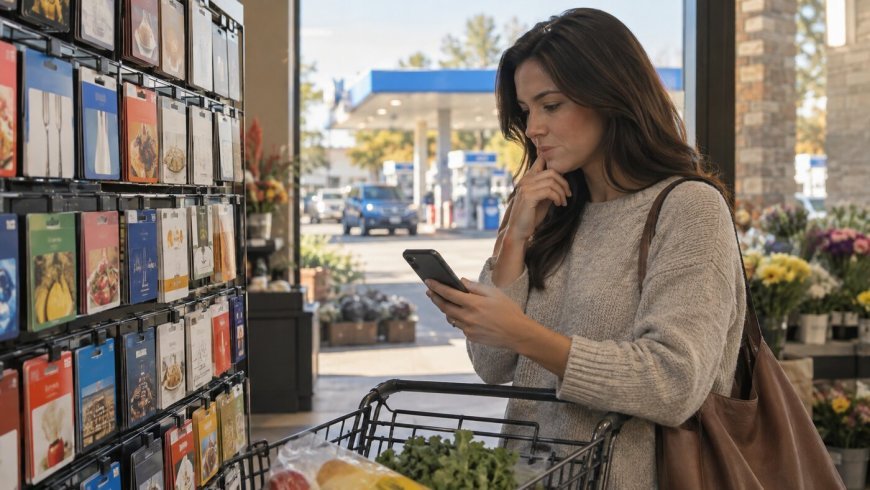
Most fuel-point programs do not care whether the dollars on your receipt were milk or a gift card. They care that you scanned the loyalty ID and hit a promo window. That is the whole opening: buy the cards you were going to spend anyway-birthday dinner, the home-improvement run, the streaming reload, the niece's store she actually shops-while the grocery app is paying 2x to 4x fuel points on those cards. Same cart of real life. Fatter number at the pump later.
This is a seasonal stacking playbook, not a new hobby that eats cash flow. If you do not already buy gift cards, do not start a collection. If you do-or if you already spend at the same five brands every month-time the purchase to a multiplier week and keep a short checklist so the points do not expire in a drawer. Programs change by banner and ZIP code. Treat every multiplier below as a pattern to verify in your own app, not a promise on this week's endcap.
The rule that keeps this from becoming clutter
Only buy a card you will spend in the next 30-60 days on something already in the budget. Birthday you were going to pay for. Hardware store trip already on the calendar. The restaurant you use for Thursday takeout. A reload on a store you shop every month.
A pile of $25 cards "because fuel points" is how gift cards become junk-drawer money. Breakage-the balance you forget-is a quieter loss than a high pump price. If you cannot name the week you will spend the card, put it back.
Second half of the rule: confirm, in this month's fine print, that gift-card purchases earn fuel points at all. Plenty of banners exclude them except during a published promo. Buying $200 of cards on a non-promo week and assuming 4x is how people write angry reviews of a program that never offered that deal on Tuesday.
How a gift card becomes fuel points
The loop is the same one grocery loyalty already uses. Scan the app or card. The register rings merchandise. Fuel points (or cents-off) post based on dollars, on a multiplier, or on a mix of both. Redeem at partner pumps-or sometimes at the store's own gas-up to a gallon cap, before the points expire.
Gift cards sit in that loop as high-dollar, low-spoilage merchandise. A $100 restaurant card can move the fuel meter as much as $100 of groceries without filling a fridge you do not have room for. During a 2x-4x fuel-point event on selected cards, that $100 can behave like $200-$400 of ordinary grocery spend toward the same meter. That is the only reason to care about the gift-card aisle.
Three layers, in order:
- Base: does a gift-card dollar earn fuel points this week at all?
- Multiplier: is this brand on the 2x-4x list, and is there a cap per card or per household?
- Redemption: do you have a partner station on a route you already drive, and are you near a gallon cap or an expiration date?
Miss layer one and the pretty endcap is just a gift-card store. Hit all three on spending you already planned, and the pump math gets interesting without a single extra grocery bag.
Map the promo before you stand in the aisle
Open the grocery app on the couch, not under fluorescent light. Screenshot or note:
- Which card brands are in the multiplier (restaurants, big-box, home improvement, entertainment, fuel brands, Visa/vanilla last-those often have fees or exclusions)
- The multiplier and the dates, including whether it ends at close of business Sunday
- Per-day or per-transaction limits (some events are "up to $200 in gift cards")
- Whether you pay with a method the store still lets earn points (some cut points on certain tenders)
- Current fuel-point balance, cents-off equivalent, gallon cap, expiration
If the app is vague, the service desk usually has a printed list during big events. One awkward question beats a $150 misbuy.
Also check whether digital gift cards in the app earn the same as plastic at the register. Sometimes they do. Sometimes the promo is in-store only. Do not assume the pretty tile in the app matches the rack by the greeting cards.
A seasonal calendar you can actually use
Gift-card fuel-point spikes are not random. They cluster around moments when stores know you will buy cards anyway. Plan the spend you already have into those windows instead of inventing new occasions.
Late winter / Super Bowl stretch. Restaurant and entertainment cards. If you were going to feed people or pay for a night out, convert that cash into plastic at the grocery store first.
Mother's Day / graduation / late spring. Restaurant, home, and "nice dinner" cards for people you were already gifting-not a stack of maybe-cards.
Back-to-school (July-August). Home improvement, big-box, office/supply. If backpacks and dorm stuff were happening regardless, route those dollars through a multiplier card you will spend the same month.
Black Friday through New Year. The loud season-and when people overbuy. Set a household cap before Thanksgiving: only cards with a name and a date on a shared note. Random Tuesday 4x flashes are useful if that brand is already on your list, and traps if you drive across town for a card you will not spend until April.
Put the next likely window on the family calendar the same way you put "trash night." The habit is "check the app before we buy the birthday card," not "become a gift-card person."
What to buy, what to skip
Buy when: you can name the merchant, the week you will spend it, and the promo in the same sentence. Restaurant cards for a place you already go. Home improvement for a project with a cart already half-built. A reload on a store card you keep at $0 on purpose until a sale. A teen's preferred store, if that is genuinely this month's gift.
Skip or slow down when: the card has an activation fee that eats the fuel-point value. Vanilla/prepaid Visa-style cards often fail this test. Mall-wide cards with fees. Brands you "might try." Cards that expire faster than your habit. Fuel-brand gift cards that cannot be used at your actual station. Stacks of small denominations that are easy to lose and hard to spend down.
Restaurant cards beat novelty every time because most households already leak money there. If Thursday pizza is a fact of life, a 4x week is when you pre-buy four Thursdays-not twelve.
If the store's gift-card bonus is store credit instead of fuel points, pick the currency you need this month. Store credit wins when next week's grocery run is locked in. Fuel points win when you drive a lot and the fridge is already covered.
Stacking without turning it into a second job
You can layer a little. You should not layer everything.
A stack that usually stays sane:
- Confirm gift cards earn fuel points this week, and note the cap
- Buy only the planned cards, preferably in one trip so you do not "just add one more"
- Scan loyalty. If digital coupons apply to something else in the cart, fine-do not force a grocery haul to "make the trip worth it"
- If you already use a grocery or wholesale cash-back card and you pay it in full, that rebate can sit underneath. If you do not, skip this layer. Interest is not a stack, it is a leak
- Redeem fuel on a normal commute once you are near a useful cents-off tier, or before expiration-whichever comes first
Do not drive extra miles to a partner pump to rescue a thin discount. Extra miles erase gift-card wins faster than people admit. Do not buy groceries you will waste to "round out" the trip. The gift card was supposed to spare you from stuffing the pantry.
Manufacturer coupons almost never apply to gift cards. Ignore anyone who talks about "couponing gift cards" like it is 2012.
A weekly habit checklist (screenshot this)
Keep it to ten minutes on a quiet night-Sunday is fine, any night you already open the grocery app is better.
Weekly (5-8 minutes):
- Open grocery app + fuel rewards app. Note current points, cents-off, expiration, gallon cap
- Scan the weekly ad and the gift-card / "bonus fuel" tiles. Screenshot the promo dates
- Look at the next 14 days of real spend: birthdays, takeout nights, a hardware run, a kid activity
- If a planned spend matches a multiplier brand, add "buy card at grocery" to that day's list
- If nothing matches, buy nothing. Close the app
On the buy day:
- Recheck that the promo is still live (these end early more often than blogs admit)
- Stay under the posted cap
- Scan loyalty before the first item, not after the cashier has bagged
- Keep the receipt and a phone photo of the card numbers stored the way you already store passwords-not as a pile of email forwards
- Write the spend-by date on a shared household note
Fuel day:
- Check balance in the parking lot before the nozzle goes in
- Confirm partner station and gallon cap
- Screenshot the pump total if the discount looks wrong. Programs glitch
Month-end (10 minutes):
- Cards bought, cards spent, leftover balances, fuel dollars saved
- If leftover balances are growing, you are collecting, not stacking. Pause purchases until the drawer is empty
- If the stack saved less than a casual coffee run after all the tapping, drop gift cards and keep only scan-and-redeem on real groceries
Two worked patterns (illustrative, not a promise)
The Thursday-pizza household. You spend about $40 a week on the same takeout. A 4x restaurant-card event runs for ten days with a $200 cap. You buy $160 of that restaurant's card (four weeks), scan loyalty, and otherwise shop a normal milk-and-eggs list. You just pointed $160 of already-scheduled food at a multiplier. You did not add pizza nights. Redeem fuel on the commute you already drive, before the points sit long enough to feel abstract.
The one home-project month. A fence repair is happening in August. Back-to-school 2x-3x includes the hardware chain you were going to anyway. You buy the card at grocery for the amount of the materials list-not "a little extra in case." You spend it within two weeks. If the project slips 90 days, you picked the wrong window; put the card on the next multiplier and do not buy a second one "to be safe."
Notice what is missing: a spreadsheet of 14 brands, a Facebook group, a trunk full of plastic. The playbook is timing, not volume.
Household and "who holds the cards" reality
Gift cards vanish in shared houses. Pick one spot and one person who is allowed to buy them. If two people grocery-shop, only one buys promo cards in a given week-double-buying into a household cap is how 4x becomes "why is this 1x." Tell teenagers the truth: a restaurant card is this month's already-planned dinners, prepaid, not extra fun money.
Mistakes that wipe out the fuel-point "win"
Buying cards to manufacture points. If you invent $200 of spend to chase $15 of gas, you lost. Points are a side effect of planned spending.
Ignoring activation fees and vanilla prepaid cards. A $6.95 fee on a $50 card can erase the fuel value and then some.
Missing the gallon cap. A huge cents-off number on gallons that do not qualify is a fake victory screenshot.
Letting points or cards expire. Set a reminder at the halfway mark of whichever window is shorter.
Chasing a non-partner station with a pretty curb price. Compare out-the-door totals, including extra miles.
Paying with revolving credit "because rewards." Category cash back under a gift-card purchase only helps if the statement is paid in full.
Forgetting the card in a photo roll. A balance you cannot find is a donation.
A one-page setup for this week
Tonight: open both apps. Write the current fuel math (dollars → cents-off, cap, expiration). Scan the gift-card promo tile. List the next two weeks of spend you cannot honestly cancel. If a brand matches, buy that card on your next grocery trip-one trip, under the cap, loyalty scanned. If nothing matches, buy milk and leave the rack alone.
Next month: repeat the Sunday check. That is the playbook. The seasonal spikes will keep arriving. You do not have to catch all of them. You have to catch the ones that were already on your calendar.
Bottom line
Turning gift cards into fuel points is not a new way to shop. It is a way to time the shopping you already do. Buy cards you will spend in 30-60 days, during a 2x-4x window your grocery banner is actually running, then redeem fuel on a route you already drive. Keep a weekly app check and a household cap so the rack does not become a second pantry.
Start with linkage, the gallon cap, and one planned card this week-if a promo lines up. Skip it if it does not. The quiet version of this habit beats the loud version every time, and it still shows up as a lower number on the pump.
What's Your Reaction?
 Like
0
Like
0
 Dislike
0
Dislike
0
 Love
0
Love
0
 Funny
0
Funny
0
 Angry
0
Angry
0
 Sad
0
Sad
0
 Wow
0
Wow
0