




















Build a Worry-Free Retirement Nest Egg: 5 Simple Habits to Start in 2026

Building a secure retirement doesn't require complex strategies or massive starting capital in 2026—consistent, straightforward habits compound powerfully over time. With higher contribution limits (401(k)s at $24,500 for under 50, plus catch-ups; IRAs at $7,500 plus $1,100 catch-up for 50+), permanent favorable tax rules, and tools like automatic investing widely available, starting or accelerating savings feels more achievable than ever. The average retiree believes around $824,000 is needed for comfort, but many fall short—yet small, repeatable actions focused on automation, maximization, and smart allocation can close the gap without drastic lifestyle changes.
Habit 1: Automate Contributions and Pay Yourself First
Set up automatic transfers to retirement accounts right after payday—treat savings like a non-negotiable bill that comes before discretionary spending. Most employers allow payroll deductions into 401(k)s, and brokers like Vanguard or Fidelity make recurring IRA deposits effortless. Aim for at least 10–15% of income (including any employer match) as a baseline; even starting at 5–10% builds momentum. Automation removes willpower from the equation, leverages dollar-cost averaging to buy more shares during dips, and harnesses compounding—turning modest monthly inputs into substantial growth over decades.
Habit 2: Capture Every Employer Match—It's Free Money
If your job offers a 401(k) or similar plan with matching contributions, prioritize contributing enough to get the full match—often 50% or 100% up to 6% of salary. This is essentially guaranteed instant return with no risk, far outpacing most investments. In 2026, with many employers emphasizing matches as a retention tool, missing it means leaving money on the table. Review your plan annually to ensure you're optimized, and consider increasing contributions gradually (e.g., 1% more per year) as raises come in—small steps add up without feeling painful.
Habit 3: Build Tax Diversification with a Mix of Accounts
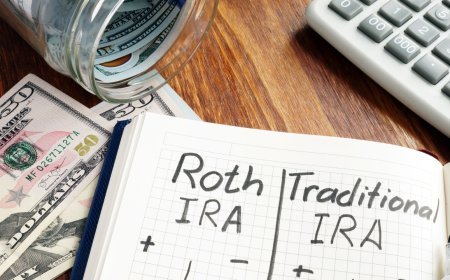
Don't put everything in one tax bucket—combine traditional (pre-tax) and Roth (after-tax) accounts for flexibility in retirement. Traditional reduces taxable income now and grows tax-deferred; Roth offers tax-free withdrawals later and no required minimum distributions (RMDs) during your lifetime. Beginners often start with Roth IRAs (if income-eligible) for tax-free growth, while maxing traditional 401(k) matches for immediate benefits. This "tax diversification" hedges against future rate changes or personal bracket shifts, giving you options to withdraw strategically and minimize taxes.
Habit 4: Keep It Simple with Low-Cost, Broad-Market Index Funds
Once money flows in, invest in simple, diversified options like total stock market or S&P 500 index funds/ETFs (e.g., VOO, SCHB, or FZROX) with rock-bottom fees (under 0.05%). These provide exposure to hundreds of companies, historically averaging 7–10% annual returns long-term after inflation. Avoid stock-picking or frequent trading—set a target allocation (e.g., 80/20 stocks/bonds if younger, more conservative as you age) and rebalance once a year. Robo-advisors or target-date funds automate this further, adjusting risk as retirement nears for true set-it-and-forget-it ease.
Habit 5: Review Annually, Adjust Gradually, and Stay Educated
Schedule a quick yearly check-in (e.g., January) to review balances, contribution rates, fees, and life changes—then tweak as needed without overhauling everything. Increase savings with raises or windfalls, roll over old 401(k)s to IRAs for better control, and educate yourself via free resources (IRS site, Fidelity/Vanguard tools, or short online courses). Track progress to stay motivated—seeing growth reinforces the habit. If behind, focus on catch-up contributions (extra $8,000–$11,250 in 401(k)s for 50+) or side hustles to boost inputs.
These five habits—automation, matching maximization, tax-smart diversification, simple indexing, and consistent review—create a worry-free path by emphasizing consistency over perfection. In 2026's higher-limit, tech-enabled environment, starting small and staying steady can build a nest egg that supports the retirement you envision. Begin with one or two habits this month, and let compounding handle the rest.
This article is for informational purposes only and not financial advice. Retirement planning involves risk; consult a qualified advisor for personalized guidance. Past performance doesn't guarantee future results.
What's Your Reaction?
 Like
0
Like
0
 Dislike
0
Dislike
0
 Love
0
Love
0
 Funny
0
Funny
0
 Angry
0
Angry
0
 Sad
0
Sad
0
 Wow
0
Wow
0