

























Why Your Bank Might Be Costing You Hundreds (And 5 Proven Ways to Fight Back in 2025)
In an era where inflation continues to challenge household budgets and interest rates fluctuate due to Federal Reserve policies, managing your money effectively has never been more critical. Traditional banks, while providing essential services, often prioritize their profits over your financial well-being. According to recent surveys, the average American pays around $329 annually in unnecessary bank fees, a figure that has persisted despite regulatory efforts to curb excessive charges. These fees can quietly drain your account, reducing your ability to save for emergencies, retirement, or major life goals. But the good news is that you don't have to accept this status quo. By understanding how banks operate and implementing smart strategies, you can fight back and keep more of your hard-earned money.
This comprehensive guide dives deep into the mechanisms banks use to extract fees, backed by the latest 2025 data from sources like Bankrate and the Consumer Financial Protection Bureau (CFPB). We'll explore five practical ways to combat these charges, complete with step-by-step advice, real-world examples, and recommendations for alternatives like online banks and credit unions. Whether you're a young professional building your first emergency fund or a retiree optimizing your nest egg, these tips can help you save hundreds—or even thousands—each year. Let's break it down.
The Hidden World of Bank Profits: How Fees Became a Billion-Dollar Industry
Banks have long been pillars of the financial system, but their business models have evolved dramatically. In the past, banks primarily earned revenue through interest on loans and investments. However, with interest rates hovering lower due to recent Fed cuts—down to a benchmark range of 4.25%-4.50% as of September 2025—banks have increasingly turned to fee-based income to bolster their bottom lines. A 2025 report from MoneyRates highlights that even as monthly maintenance fees have dipped slightly, they still average out to about $167.40 per year for many accounts. When combined with other charges, this pushes the total closer to $300-$329 annually for the typical consumer.
These fees aren't accidental; they're meticulously designed. Overdraft fees, for instance, average $27.08 to $35 per occurrence, often triggered by transactions processed in a way that maximizes penalties—such as clearing larger debits first to create multiple overdrafts from smaller ones. ATM fees have hit a record high of $4.86 for out-of-network withdrawals in 2025, up from previous years, making simple cash access a costly endeavor. Monthly maintenance fees range from $10.95 at smaller banks to $16.35 at larger institutions, often waived only if you meet stringent conditions like high minimum balances.
Beyond these, banks charge for paper statements ($2-$5), wire transfers ($15-$30), and even inactivity on dormant accounts. In many cases, fee income surpasses lending profits, turning everyday banking into a profit machine. A CFPB analysis estimates that consumers paid billions in overdraft and NSF (non-sufficient funds) fees in 2024 alone, with projections for 2025 showing little decline despite new regulations capping some charges at $5 for large banks. Low-interest savings accounts exacerbate the issue: traditional banks offer a paltry 0.01% APY, while inflation erodes your money's value at around 2-3% annually. This "opportunity cost" means you're effectively paying the bank to hold your funds.
Why does this matter in 2025? With economic uncertainty from global events and potential recessions, every dollar counts. Families facing rising costs for groceries, housing, and healthcare can't afford these leaks. Fortunately, awareness is growing—68% of checking account holders now avoid monthly fees entirely by choosing better options. Let's explore how you can join them.
Way 1: Break Free from the Monthly Maintenance Fee Cycle
Monthly maintenance fees are among the most insidious charges, often $10-$15 per month, equating to $120-$180 yearly for what should be a basic service. These fees are typically imposed if your balance falls below a minimum (e.g., $1,500) or if you don't have direct deposits. But why pay for the privilege of storing your money?
To fight back, consider switching to institutions that prioritize customer value. Credit unions, being not-for-profit, often offer free checking with no minimums and better overall rates—averaging higher savings APYs and lower loan interest compared to banks. Online banks like Ally, SoFi, and Capital One 360 stand out in 2025 for zero monthly fees, no minimums, and additional perks like early direct deposit.
Step-by-step guide: First, review your current statements for fee patterns. If staying put, call customer service and request a waiver—mention student status, senior discounts, or bundled services. Many banks, like Wells Fargo, waive fees for $500 in direct deposits or $1,500 balances starting October 2025. If unsatisfied, open a new account online (it takes 15 minutes with Ally). Use switch kits to automate transfers. Example: A family saving $144 yearly on maintenance could redirect that to an emergency fund, growing it faster.
Potential pitfalls: Ensure the new bank is FDIC-insured (or NCUA for credit unions) for up to $250,000 protection. Credit unions may require membership (e.g., based on location or employer), but it's usually straightforward and worthwhile for the savings.
Way 2: Dodge ATM Fees and Access Cash Smarter
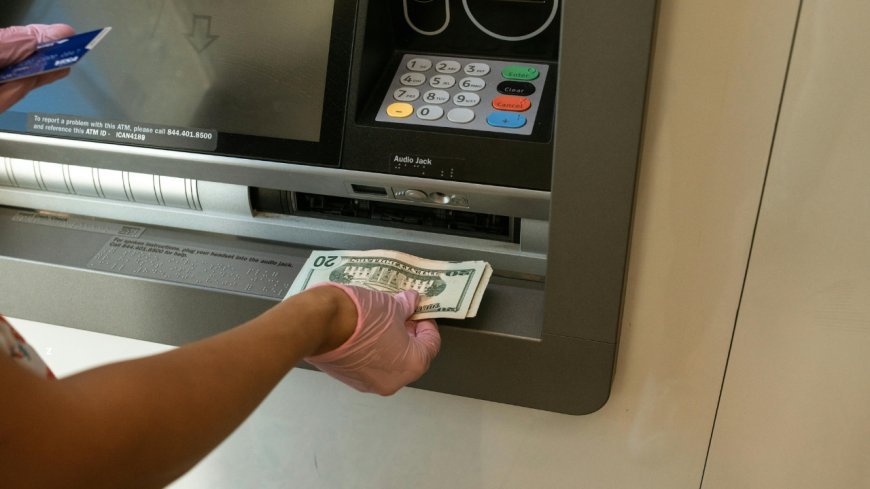
Out-of-network ATM fees have surged to $4.86 on average in 2025, with some cities like Atlanta topping the list at even higher rates. If you withdraw cash twice weekly, that's over $500 annually—enough for a vacation or debt payoff. Banks charge $2.50-$3, plus the ATM operator's fee, making convenience expensive.
Counter this by selecting banks with expansive networks or reimbursement policies. Alliant Credit Union and Capital One offer access to 80,000+ fee-free ATMs. Online banks like Varo and Chime reimburse all fees, even internationally. Practical habits: Use cash-back options at retailers (no fee up to $40), withdraw larger sums infrequently, or go digital with apps like Venmo.
Real-world tip: Track your habits via banking apps. If traveling, apps like ATM Finder help locate free machines. For gig workers relying on cash, this switch saved one user $300 last year, per Reddit anecdotes. Remember, some banks limit reimbursements (e.g., $10/month), so read fine print.
Way 3: End Overdraft Fees for Good
Overdraft fees remain a major pain point, averaging $27.08-$35 per incident, with many consumers hit multiple times due to transaction ordering. In 2025, despite CFPB caps on large banks, smaller institutions and credit unions vary, leading to billions in charges industry-wide.
Opt out of overdraft "protection" immediately—this declines transactions without funds, avoiding fees. Set low-balance alerts via mobile apps. Link a savings account for automatic transfers (often $0-$5 fee vs. $35). Apps like Acorns or Digit automate micro-savings to buffer accounts.
Case study: A survey found 7 in 10 Americans view these fees as unfair, especially since most overdrafts are under $24. By opting out and using alerts, users report saving $200+ yearly. For credit-building, consider overdraft lines of credit at low interest instead.
Way 4: Supercharge Your Savings with Higher Interest
Traditional savings accounts yield a dismal 0.01% APY, while high-yield options offer 4.05%-5.00% in September 2025, despite rate cuts. On $10,000, that's $1 vs. $500 annually— a massive difference.
Move to providers like Bask Bank (4.05% APY, no fees) or Varo (5.00%). Credit unions often match or exceed these. Automate transfers post-payday. Ladder accounts for liquidity.
Warning: Rates fluctuate; monitor via sites like Bankrate. FDIC coverage is key.
Way 5: Master the Art of Negotiation
Banks have leeway to waive fees—reps can credit $50+ per call. Politely escalate, cite loyalty, and mention competitors. If no luck, switch.
Prep: Gather statements, research alternatives. Success rate: High for persistent callers.
The Real Power of Switching Banks in 2025
Switching seems daunting, but 2025 tools simplify it. Most offer switch kits for auto-payments. Credit unions outperform banks in satisfaction, with 74-point higher scores. Expect $300+ savings yearly.
How-to: Compare via Forbes or NerdWallet lists. Open new account, transfer funds, update billers. Close old after confirmation.
Key Features to Seek in Your Next Bank
Prioritize: No fees, high APYs (4%+), ATM access, mobile apps, customer support. Top picks: Ally (best overall), SoFi (rewards).
Beyond Fees: Building Long-Term Financial Resilience
Avoid other traps like foreign transaction fees (3%) by using no-fee cards. Diversify with CDs or money markets for stability.
In 2025, with AI-driven banking apps, personalization is easier. Track progress with tools like Mint.
Final Thoughts: Empower Your Finances Today
By implementing these strategies, you could save $500+ annually, compounding to thousands over time. Don't let inertia cost you—assess your bank now. Your financial future depends on proactive steps. Start small: Check your statements today, and explore options like Ally or a local credit union. Remember, your money works for you, not the bank.
What's Your Reaction?
 Like
0
Like
0
 Dislike
0
Dislike
0
 Love
0
Love
0
 Funny
0
Funny
0
 Angry
0
Angry
0
 Sad
0
Sad
0
 Wow
0
Wow
0